Best Pokies in Geelong: Venue and Opening Checks
 Available in AU
Venue listings, operating hours and local references do not necessarily confirm that pokies are available at a particular place or time.

Table of Contents
- Opening Status Is a Local Question
- What “Best-Paying” Can—and Cannot—Mean
- The Legal Boundary Around Online Pokies
- Searching Near the Airport, CBD and Geelong
- Venues, Machines and the Record-Keeping Behind Them
- Venue Hours Are Not the Same as 24-Hour Access
- The Crown Search and the Geelong Question
- CBD Clubs and the Missing Local Venue Details
- The Parkes Search: An Unverified Local Reference
- Cashless Pokies and the Newcastle-Geelong Mix
Opening Status Is a Local Question
“Open now” asks for a fact that can change while a page remains unchanged. A general search for pokies in Geelong may turn up venue names, descriptions or older references; none of those, by itself, establishes that a particular place is open at the moment the search is made. The distinction is small in wording and large in practical meaning.
A venue listing answers a question of identity: what place is being described, and where is it said to be? An opening-status check asks something narrower: whether that place is operating at a particular time. Those two kinds of information are often displayed side by side, which can make them look equally current. They are not necessarily so. A name in a directory is not a live signal from the door.
This matters especially when the search is made early, late, or at an unusual hour. A phrase such as “open now” can sound as if it should produce a simple yes or no. But without current confirmation tied to a named venue, the answer cannot responsibly be supplied. No particular Geelong venue can be identified here as open now. Nor can a general result establish whether pokies are available at the time someone is checking.
The word “open” can also carry more than one meaning. It may refer to a venue’s general trading status, to access to a particular part of the premises, or to whether pokies are operating. A result that addresses one of these may leave the others unanswered. Even a current indication that a venue is open would not, on its own, confirm the status of its machines. The useful check is therefore specific: it needs to concern the place and the service in question, not merely a broad listing.
That is why a general search and a live-status check should not be treated as interchangeable. The first can help identify what might be relevant; the second requires information that is current enough to support a decision about going there. If the result has no clear time attached, or no indication that it reflects present conditions, its apparent immediacy may come from the wording rather than the information. Search boxes are generous with the word “now”. Reality is less obliging.
There is also a difference between a claim that a venue exists and a claim about what it offers at a given moment. A page may describe a place in broad terms without confirming its present operating arrangements. A map entry may be useful as a pointer but should not be mistaken for confirmation of pokies access. The shorter the result, the more easily those distinctions disappear. A status label can compress the situation; it cannot make an unverified detail certain.
For anyone comparing results, the sensible question is not simply whether a page contains the word “open”. It is whether the information is current, whether it refers to a specific venue, and whether it actually concerns pokies rather than the venue in general. If those points are unclear, the status remains unclear. That is not a judgement on any particular business. It is a limit on what can be inferred from a general result.
Attention: A general search result or directory listing is not a live signal and cannot reliably confirm if a specific venue is open at the current moment.
A search for Geelong pokies may begin as a broad request for places, then narrow into a question about whether anything is available at that precise moment. The second question deserves a higher standard of evidence. A directory can orient; it cannot substitute for live confirmation. And when no such confirmation is available, naming a venue as open would turn uncertainty into a claim.
The language of immediacy makes this easy to overlook. “Open now” feels like a property of a place, as if it were fixed alongside its name. In practice it is a temporary condition, dependent on circumstances that can change. A general listing can survive those changes untouched. That persistence is useful for finding information, but it is also why old or broad descriptions should not be read as a real-time assurance.
So the local question is not answered by the phrase alone. Geelong may be the location sought, and pokies may be the service in question, but an answer about current availability still needs current, venue-specific confirmation. Without it, the careful answer is that no particular venue can be confirmed as open. The distinction is plain. The status is not.
What “Best-Paying” Can—and Cannot—Mean
Looking for pokies to play in Geelong in 2026? This list offers a quick reference to the available operator details so you can assess which options may suit your preferences.
Payout speed: crypto under 1 hour, PayID 1-3 business days · Min. deposit: A$20 (A$30 to qualify for the bonus) Ricky Casino lists crypto payouts in under an hour and PayID payouts in 1–3 business days. The minimum deposit is A$20, or A$30 to qualify for the bonus.
License: Curacao Gaming Control Board OGL/2023/176/0095 (Hollycorn N.V.) Neospin lists a Curaçao Gaming Control Board licence, OGL/2023/176/0095, held by Hollycorn N.V.
License: Curacao · Payout speed: crypto 30-60 minutes, fiat 1-5 days · Min. deposit: A$10 Wild Tokyo lists a Curaçao licence, with crypto payouts in 30–60 minutes and fiat payouts in 1–5 days. Its minimum deposit is A$10.
License: Curacao Gaming Control Board OGL/2023/174/0082 (Dama N.V.) SpinsUp lists a Curaçao Gaming Control Board licence, OGL/2023/174/0082, held by Dama N.V.
License: Tobique Gaming Commission · Payout speed: crypto ~10-15 minutes, fiat 1-5 days · Min. deposit: A$30 SkyCrown lists a Tobique Gaming Commission licence. Its stated payout times are around 10–15 minutes for crypto and 1–5 days for fiat; the minimum deposit is A$30.
License: Curacao – Antillephone N.V. (Versus Odds B.V.) · Min. deposit: EUR 20 Thor Casino lists a Curaçao licence associated with Antillephone N.V. (Versus Odds B.V.). Its minimum deposit is EUR 20.
License: Curacao Gaming Authority (Jumpman Gaming Ltd) DragonSlots Casino lists a Curaçao Gaming Authority licence held by Jumpman Gaming Ltd.
License: Curacao eGaming (Roby Games Ltd) Roby Casino lists a Curaçao eGaming licence held by Roby Games Ltd.
License: Curacao OGL/2024/1335/0780 · Min. deposit: EUR 20 Vegaz Casino lists a Curaçao OGL/2024/1335/0780 licence. Its minimum deposit is EUR 20.
License: Curacao Gaming Control Board (TechSolutions Group N.V.) Bizzo Casino lists a Curaçao Gaming Control Board licence, held by TechSolutions Group N.V.
“Best-paying” sounds like a property that can be read from a label: one machine gives more back, another less. The phrase is less tidy than that. A return percentage describes a theoretical pattern across a very large number of plays, not a promise about the next session or a particular person’s result. It cannot tell someone in Geelong which machine will pay out tonight.
There is another complication. A specialist review reports that some game providers let casinos choose among different return-to-player settings for the same pokie. If that account applies to a particular game, the title alone does not establish its return setting. The same named game could therefore be configured differently in different places. A figure quoted without identifying the setting and the casino is incomplete; a figure attached to one venue cannot automatically be carried over to another.
That distinction matters when people compare claims about the best-paying pokies in Geelong. A game’s reputation, a story about a large win, or a number copied from a general description does not establish what is configured at a particular venue. Even a correctly reported return percentage is a long-run statistical measure, not a forecast for the next visit. It says nothing certain about the outcome of an individual spin.
The machinery behind that uncertainty is not mysterious, though it is often described as if it were. A Random Number Generator selects the outcome of each spin, and the result of one spin does not determine the next. A losing run does not make a win “due”; a recent win does not make another one more likely. The machine has no memory of a player’s patience, expenditure or previous result. The arithmetic may describe a broad distribution over time. It does not negotiate with the person in front of the screen.
This is why “best” needs a definition before it can be used as a comparison. It might mean a stated return setting, but only if that setting is known and the comparison is like for like. It might mean a game that someone enjoys, which is a matter of preference rather than payout evidence. Or it might mean a recent win, which is a single outcome and cannot demonstrate that a game pays better in general. Those meanings are often compressed into one confident phrase. The compression does not improve the evidence.
For Geelong venues, a game-level claim and a local claim are also separate things. A title may be discussed online without establishing that it is available at a particular casino or club in the city. Conversely, finding a game in a venue would not reveal which return setting is in use. The words “in Geelong” locate the search, not the underlying data. A city name cannot turn a general game description into a verified local comparison.
The same caution applies to claims presented as rankings. A list can look precise because it places games in order, but the order is only as sound as its basis. If it does not say which setting was assessed, where it applies, and what “best” measures, the ranking may be more decorative than informative. The presence of a percentage does not cure a missing comparison method. Precision in appearance is not the same as precision in meaning.
- Define “best” based on known return settings
- Treat return percentages as long-run statistical measures
- Verify game availability at a specific venue
- Use a game’s reputation to forecast a single session
- Assume a return figure applies to all venues
- Mistake a ranking for a guaranteed payout
In practical terms, a promised payout should not be read as a personal expectation. The return setting, where one exists, describes a theoretical proportion across repeated play under specified conditions. Individual results can differ sharply from that broad measure, because each spin is generated afresh rather than adjusted to bring a player toward an average. A long-run figure cannot promise recovery after losses or explain what will happen during a short session.
So “best-paying” can describe a claim about configuration, provided the claim is tied to a clear source and setting. It cannot identify a guaranteed winner, predict a session, or prove that a game is superior at every Geelong venue. That boundary is less exciting than a promise of easy returns. It is also the part worth keeping.
The Legal Boundary Around Online Pokies
A request for online pokies in Geelong points to a different kind of service from a search for a physical venue. The word “Geelong” can locate a place on a map; it cannot turn an internet casino into a local one. In Australia, the legal distinction is unusually stark: real-money online casino games cannot be lawfully offered to people in the country by an operator without a domestic licence, and no Australian licence for online casinos has been issued.
That leaves no locally licensed online casino behind a page promising Geelong play, whether the page speaks of ordinary pokies, a no-deposit offer or high betting limits. A familiar place name is not evidence of local oversight. Nor does the appearance of an offer make the service a lawful Australian casino. Online promotions can borrow the language of local hospitality while sitting outside the protections attached to a physical venue.

The law’s principal target is the company providing the service, not the individual at the screen. Australians are not criminally liable simply for playing on an offshore site that accepts them. That distinction matters, but it is not a seal of safety. The legal exposure and the practical risk fall in different places: an operator may breach Australian law, while a player may still be left with a disputed account or unpaid winnings.
If an offshore casino withholds a win, Australian law offers no domestic route for the player to compel payment. A foreign operator’s terms, complaint process or licensing claims do not create an Australian remedy. The distance is not merely geographical. It is a gap in enforceable protection.
This is why a search for the best-paying online pokies in Geelong cannot be answered as if it were a local venue guide. It asks about a product delivered by an operator, often outside Australia’s regulatory reach, rather than a machine in a Geelong club or hotel. The place name may describe the intended audience, not the location, supervision or legal status of the service.
The same caution applies to claims about real-money play and promotional offers. A “no deposit” label describes an inducement, not a licence; it does not change the legal position of the operator. Nor does a large maximum bet establish that a site is accountable in Australia. These phrases can make an online service sound tailored to local players without making it a domestic service.
Australia’s approach draws a boundary around the provider rather than treating every player as an offender. That boundary can be easy to miss on a screen designed to look seamless. A site may load, display familiar currency or accept an Australian customer, yet none of those details supplies the local legal protection absent from the online casino market. Accessibility is not authorisation.
Legal Risk
Real-money online casino games cannot be lawfully offered to people in Australia by operators without a domestic licence, which has not been issued.
The physical and online meanings of “pokies in Geelong” therefore need to stay separate. A land-based venue is governed through the rules that apply to premises and machines; an online casino is a service offered across a network, and Australian law prohibits operators from supplying it to people here without a licence that does not exist. The shared vocabulary conceals a different legal arrangement.
For anyone weighing an offshore site, the central risk is not that a player will be prosecuted for playing. It is that the operator may sit beyond Australian enforcement in the very dispute that matters most: whether winnings will be paid. Local wording cannot close that gap. The boundary remains.
Searching Near the Airport, CBD and Geelong
A location search can look precise while leaving the important part unsettled. “Near the airport” may mean inside an airport precinct, somewhere on the route into town, or simply within a broad map radius. “Near the CBD” has the same elastic quality: it can refer to a short walk, a drive, or an area that a search service has grouped under a central label. The wording narrows the map, but not necessarily the meaning.
That distinction matters for anyone looking for pokies around Geelong. A result associated with Geelong does not, by itself, establish that a venue is in the central business district, close to the airport, or even in the particular part of the city being considered. Search and map services organise places according to their own categories and boundaries. Those labels are useful starting points, not a substitute for a confirmed address.
Airport searches are especially easy to misread. A listing returned for pokies near Geelong Airport might describe a place in the wider region rather than a venue within the airport itself. “Near” is not a formal distance, and the phrase does not say whether the result is convenient on foot, reachable by road, or merely associated with the same broad locality. An airport name in a result is not proof of an airport venue.
The same caution applies to searches for pokies in Geelong’s CBD or in North Geelong. These are different location questions, even when a search page places their results together. A broad Geelong result may cover an area larger than the neighbourhood implied by the wording. Conversely, a venue described as central may not be close to the particular street or destination that prompted the search. A pin on a map can look decisive; the label attached to it may be less so.
There is also a small but revealing shift in the phrase “near me”. It turns a place-based search into a personal one, relying on a device’s location settings and the boundaries chosen by the service. The results may change with those settings. That does not make them meaningless; it means “near” belongs partly to the map’s design, not only to the geography.
For a useful comparison, the location needs to be checked at the level of the actual venue address, rather than inferred from a headline, category or search snippet. The relevant distinction is between a result that mentions Geelong and a place whose location has been established in relation to the airport, the CBD or North Geelong. Without that step, a list can appear local while answering a looser question.
Geography is stubborn. Search labels are not. That is a modest standard, but it is the difference between a useful map and a confident-looking guess.
Venues, Machines and the Record-Keeping Behind Them
A venue’s reputation is a poor substitute for knowing how it responds when gambling stops looking recreational. The more useful question is what happens on the floor: who is responsible for noticing signs of harm, and whether concerns are recorded rather than disappearing into the background noise of a busy room.
A report published by regionriverina.com.au says that, from 1 July, venues operating more than 20 gaming machines must have a dedicated responsible gambling officer (RGO) on duty while those machines are running. The threshold matters: the reported requirement is tied to the number of machines, not to whether a venue calls itself a club, hotel or casino. It also describes a one-month grace period for venues to remove signage and introduce the officer role.
That is a practical distinction between a title on a roster and a person available during machine operation. An RGO is part of the venue’s oversight, not a badge that tells patrons which room has the friendliest machines or the best chance of a win. The role concerns gambling harm and the venue’s response to it. A polished foyer can be arranged in an afternoon; attentive oversight is less decorative.
The same report describes a gambling incident register that venues will be required to keep. It is intended to capture occurrences, including situations where a patron’s behaviour suggests they may be at risk of harm or already affected by it. In this arrangement, record-keeping is not merely administration. It gives a concern a traceable place inside the venue’s responsibilities, rather than leaving it as an impression that staff might remember later.
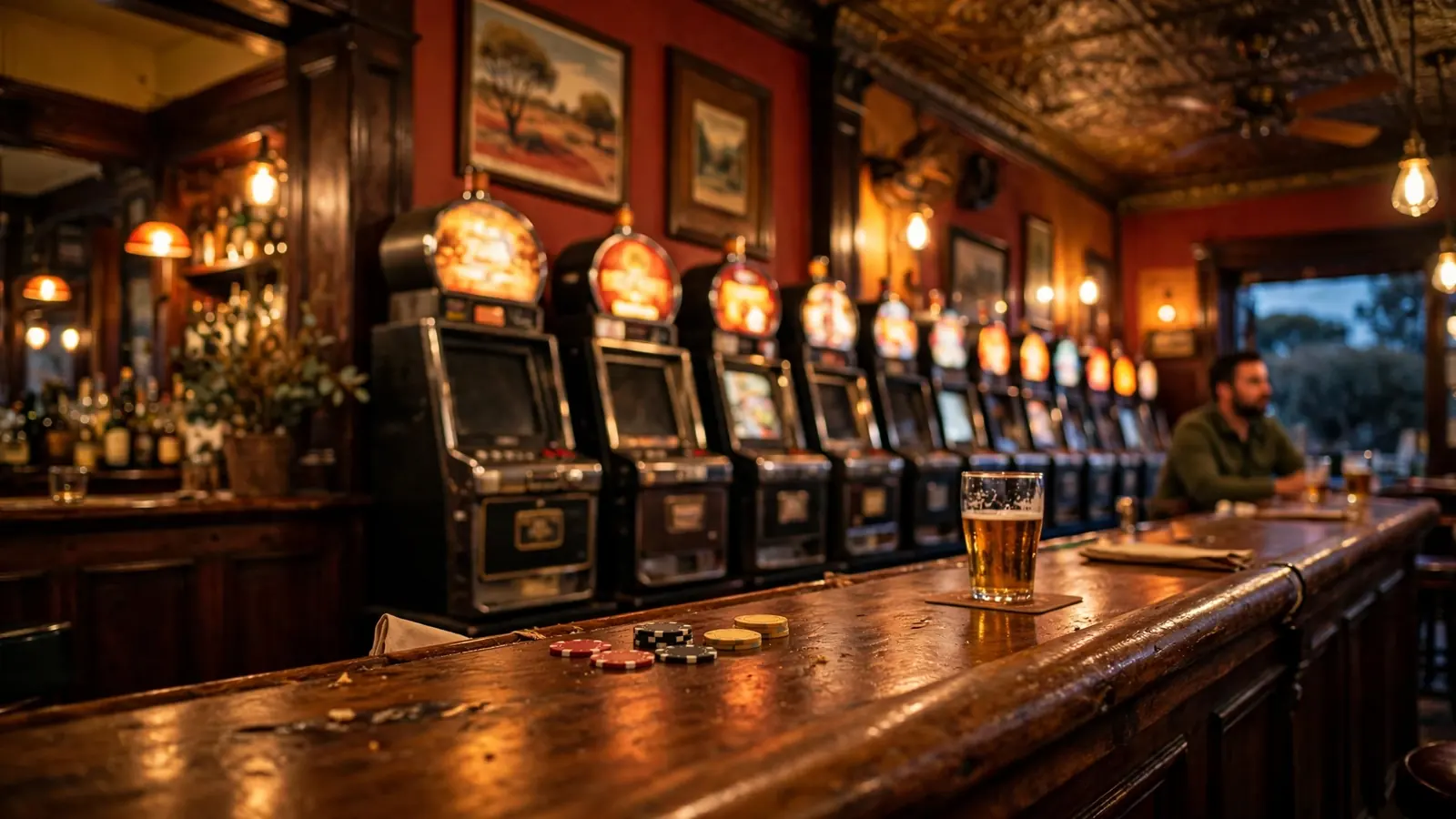
A register cannot, by itself, prevent harm. Nor does the existence of an officer establish that every interaction will be handled well. But both measures shift attention from the machine alone to the institution around it: staff, procedures and the decisions made when a person’s play appears to change. That is a modest, important change in what counts as venue quality.
For someone comparing Geelong pokies venues, these safeguards offer a more grounded lens than a casual ranking. They do not identify a “best” venue, and they say nothing about a machine’s returns. They concern how a venue is expected to organise support and document incidents. The familiar language of “best” tends to turn a complicated social setting into a scorecard. Oversight is not a scorecard.
The record matters because gambling harm often becomes visible through small events before it becomes a public crisis. A person may show distress, lose control of a session, or need staff attention; the register gives such occurrences a formal context. The officer requirement, meanwhile, places responsibility on the venue while machines are operating. Neither measure makes a venue harmless. They make responsibility harder to treat as somebody else’s business.
Not glamour. Governance.
Venue Hours Are Not the Same as 24-Hour Access
A venue’s opening hours and the hours when pokies may be used are related, but they are not interchangeable. A building can admit people for food, drinks or other services while its gaming area follows a different schedule. A listing that gives a venue’s general hours therefore does not, by itself, establish when its pokies operate.
Venue Access A building’s general opening hours do not necessarily mean the gaming area is operating; these two schedules are not interchangeable.
That distinction matters in searches for Geelong pokies hours. “Open” can describe the doors, a particular service or the gaming area; the word alone does not settle which. A late-closing venue is not automatically a round-the-clock pokies venue, and an all-night assumption cannot be drawn from an address or a broad business-hours listing. Twenty-four-hour access is a specific claim, not a synonym for a late finish.
Hours can also be presented in ways that obscure what is actually covered. A venue may publish one schedule for the whole premises, while a separate notice or direct confirmation is needed to establish gaming-room hours. Public holidays and special events can complicate the picture further: a familiar weekly schedule may not describe a particular date. None of these distinctions is uniquely Geelong’s. They are ordinary features of businesses that combine several services under one roof.
The phrase “24-hour pokies in Geelong” compresses several questions into a handful of words: whether a venue is open continuously, whether its gaming area is operating continuously, and whether those conditions apply on the day in question. Treating those as one question invites a false certainty. Even a venue described as open at all hours would not, without more, prove that its machines are available throughout that period.
There is a small social history in the way such places are described. Hospitality venues often advertise the hours that matter most to their broadest trade; gaming access is a more specific part of the business. The general schedule travels easily across directories, maps and listings. The detail that would make it useful for a pokies visit may not travel with it. A neat row of opening times can conceal a less neat arrangement.
For anyone comparing local listings, the useful distinction is not between “early” and “late” but between premises hours and machine hours. A notice applying to the gaming area is more relevant than a general venue profile; a current confirmation is more relevant than a copied listing whose date is unclear. Without that distinction, “open all day” becomes an attractive phrase doing work it was never designed to do.
Around-the-clock access is not a casual extension of ordinary opening hours. It is a separate condition, and should be described as such.
The Crown Search and the Geelong Question
The words “Crown” and “Geelong” can appear together in a request for pokies without proving that they refer to a single local venue. A familiar name may be used as a point of comparison, or simply become attached to a place in a loosely formed search. The wording is suggestive; it is not an address.
That distinction matters when looking for a Crown casino in Geelong. A phrase such as “pokies at Crown in Geelong” reads as though the venue has already been identified, but the phrase itself supplies no confirmation. Nor does repetition make the connection stronger. Several variations of the same wording can all rest on the same untested assumption.
The useful question is therefore narrower: is there reliable venue information that connects Crown with a Geelong pokies room? Without that, a local recommendation, directions or a claim about machines at the venue would be guesswork dressed as service. A name in a search box is not a premises register.
The same caution applies to requests for the best pokies room in Geelong. “Best” could mean a room’s atmosphere, access, facilities or something else entirely; the phrase does not establish which venue is being assessed, let alone the basis for ranking it. A confident list would conceal the missing link rather than resolve it.
Maximum cash payout is another phrase that sounds precise while leaving the central details unsettled. It might refer to a machine, a prize, or a venue’s payment arrangements. Without an identified venue and a clearly stated basis for comparison, there is no sound local figure to report. Precision in wording is not the same as precision in evidence.
This is a small but familiar feature of place-based information: names travel more easily than facts. A well-known brand can lend a sentence an air of authority, while the location remains unconfirmed. The result is a tempting shortcut—brand, suburb, machines—where each part appears to validate the others. It does not.
For Geelong, the Crown connection should remain an open question unless dependable local information establishes it. That restraint is less satisfying than a neat venue answer, but more useful than inventing one. No address follows from a phrase.
CBD Clubs and the Missing Local Venue Details
A club and a room with pokies are not interchangeable ideas. “Club” can suggest a membership organisation, a place to eat or meet, or simply a venue category in a directory. The word alone does not establish that pokies are available, or that a particular place sits in central Geelong. That distinction matters when a search for the best pokies in Geelong’s CBD starts to look like a shortlist of clubs.
A ranking needs something firmer than a label. Without a confirmed club identity, CBD location and machine details, calling one venue “best” would make the adjective do all the work. It would say more about the confidence of the list than about the places on it. A polished directory entry is not the same thing as a checked description of what a venue offers.
Centrality also has a social meaning. In a city, the CBD is often treated as a convenient container for entertainment: a cluster on a map, an easy answer to “where can people go?” But a map category cannot establish what happens inside a building. The difference between a club’s public-facing description and its actual facilities is precisely where vague venue lists become unreliable.
The phrase “Geelong clubs with pokies” therefore contains two separate claims: that a place is a club, and that it has pokies. Adding “CBD” makes a third, about location. None should be inferred from the others. A venue may be described as a club without that description confirming its gaming facilities; a mention of pokies does not, by itself, settle where the venue is.
Self-exclusion belongs to a different part of this picture. It is a recognised responsible-gambling tool, alongside deposit, loss and session-time limits. Its presence in a venue discussion is not a feature that makes one club better than another. It marks a boundary: gambling is not simply entertainment arranged around a room, but an activity that can require people to limit or stop their participation.
That boundary deserves plain language rather than decorative assurances. A club list should not imply that self-exclusion works identically across every venue or setting; the measure is a tool, not a promise about its reach. Nor does a central address make a venue more suitable. The city-centre label answers geography only when the location is established. It says nothing about the machines, the safeguards, or the people who may need them.
No grand ranking follows from a category name. A club is a place; “best” is a judgement. Between the two, evidence matters.
The Parkes Search: An Unverified Local Reference
A reference to Parkes alongside Geelong is difficult to interpret on its own. Parkes could be a place name, a surname, or a word carried over from another search; the wording does not establish which meaning was intended. Nor does it establish a connection to a Geelong pokies venue.
That distinction matters because a place name can look like a useful local clue while doing very little to identify a destination. A reader looking for pokies in Geelong may encounter the Parkes wording and assume it names a nearby club or a particular part of the city. Without a confirmed venue link, that would be an assumption rather than a reliable lead.
The same caution applies to any claim that a venue associated with Parkes is among the best pokies options in Geelong. “Best” needs a basis: a named place, a stated measure, or verifiable details about what is being compared. The Parkes reference supplies none of those by itself. Repeating it as though it were a recognised local venue would turn ambiguity into apparent fact.
Names travel oddly online. A term may be copied from an old listing, combined with a location by someone searching quickly, or used in a different sense altogether. Those possibilities explain why the wording might appear, but they do not settle what it means. The uncertainty remains.
For a practical venue search, a name needs to be corroborated by details that identify the place, such as an official venue listing or direct confirmation from the business. A bare association between Parkes and Geelong is not enough to show that a pokies venue exists under that name, or that it is in Geelong. Until the reference can be tied to a specific, identifiable place, it should be treated as unresolved rather than as a recommendation.
A useful local guide separates what a name suggests from what it can actually establish. Here, Parkes is a clue without a confirmed destination. No more than that.
Cashless Pokies and the Newcastle-Geelong Mix
“Cashless” can describe several different arrangements, and the word alone does not identify a particular pokie or venue. It might refer to how money is loaded for play, how a machine accepts payment, or a broader venue policy about handling cash. Those are not interchangeable features. A mention of cashless play, without a named and confirmed venue or product, is not evidence that the feature is available in Geelong.
Nor does a payment label tell much about the machine itself. It says nothing, by itself, about a game’s return settings or the randomness of a spin. Payment convenience and game characteristics belong to different questions; packaging them together makes a tidy phrase, not a reliable description.
The Newcastle-Geelong wording is similarly unsettled. It could join two separate place-based interests, compare them, or reflect a request spanning both locations. It does not establish that a venue, machine or shared offer connects the cities. A recommendation that quietly treats the phrase as a single local destination would be doing more geography than the words warrant.
That distinction matters because a search phrase can compress several intentions into a few words. Someone interested in cashless payment may be looking for a feature; someone naming two cities may be trying to compare places. Neither intention confirms what any venue provides. For Geelong, cashless pokies remain a feature to verify directly through reliable venue information, rather than something inferred from a broad label. And Newcastle remains a separate place unless a clear, supported connection says otherwise.
The neatness is misleading. A payment method, a machine feature and a location are three different pieces of information. Keeping them apart prevents a vague description from turning into a claim about local availability.
Are online pokies legal for Australian players?
Yes, Australian players can legally play on offshore sites that accept them, but no Australian-licensed online casino exists. The law targets operators, and players have no legal recourse in Australia if an offshore casino withholds winnings.
What is the cost-benefit calculation of casino promotions?
Check the wagering requirement and any cash-out cap before accepting a promotion. For example, a $500 bonus with a 40x requirement calls for $20,000 in bets; if the requirement applies to a $500 deposit plus a $500 bonus at 35x, it calls for $35,000 in bets.
What’s the best strategy for playing pokies?
No strategy can predict or control the outcome: each spin is an independent random event, so a losing streak does not make a win due. Deposit, loss and session-time limits can help you manage your play.
Published by the Big Candy Casino team.