Casino in Adelaide: Stays, Dining and Venue Details
 Available in AU
A careful look at casino stays, venue amenities and related searches, without treating unverified listings or offers as confirmed facts.
Table of Contents
- A Casino Stay in Adelaide: What the Search Suggests
- Poker Rooms, Tournaments and the Limits of What Is Known
- Adelaide Casino as a Venue, Not a Verified Programme
- Parking, Dining and the Online-Casino Distinction
- Accommodation Near the Casino: A Search, Not a Verified Deal
- Contact Details, Bars and the Venue’s Unverified Practicalities
- Breakfast, Buffet Searches and the Online Bonus Fine Print
- Spa, Address and Dress-Code Searches Without Invented Details
- Restaurants at Adelaide Casino: What Can Be Confirmed
- Food and Pool Queries, Kept Separate from Assumptions
A Casino Stay in Adelaide: What the Search Suggests
A casino hotel sounds like a single proposition: a room upstairs, a gaming floor downstairs, and no need to plan the evening around the trip back. The phrase carries its own promise of proximity and convenience. But a name in a search result is not proof that a particular room, package or rate is available, and the idea of a casino stay should not be mistaken for a confirmed booking option in Adelaide.
That distinction matters because accommodation searches tend to collapse several different questions. Is there a hotel associated with the casino? Are rooms offered by the venue itself, or by separate hotels? Does a deal include accommodation, or is the word “deal” simply a label attached to a changing rate? Each question requires a different answer. A polished listing can make them appear settled when it may only be describing an aspiration.
A hotel room is also more than a bed placed near an evening’s entertainment. The useful details are ordinary and specific: what the room includes, when it can be occupied, what cancellation conditions apply, and whether the displayed price covers the full stay. Those particulars are what turn a vague casino-hotel idea into a decision. Without them, comparisons are mostly comparisons of wording.
Choosing a casino for Adelaide means checking the details that matter to you, such as available payment information and licensing. This list offers a concise reference to the known details for each operator.
Payout speed: crypto under 1 hour, PayID 1-3 business days · Min. deposit: A$20 (A$30 to qualify for the bonus) Ricky Casino lists crypto payouts in under an hour and PayID payouts in 1–3 business days. The minimum deposit is A$20, or A$30 to qualify for the bonus.
License: Curacao Gaming Control Board OGL/2023/176/0095 (Hollycorn N.V.) Neospin lists a Curacao Gaming Control Board licence, OGL/2023/176/0095, held by Hollycorn N.V.
License: Curacao · Payout speed: crypto 30-60 minutes, fiat 1-5 days · Min. deposit: A$10 Wild Tokyo lists a Curacao licence, with crypto payouts in 30–60 minutes and fiat payouts in 1–5 days. Its minimum deposit is A$10.
License: Curacao Gaming Control Board OGL/2023/174/0082 (Dama N.V.) SpinsUp lists a Curacao Gaming Control Board licence, OGL/2023/174/0082, held by Dama N.V.
License: Tobique Gaming Commission · Payout speed: crypto ~10-15 minutes, fiat 1-5 days · Min. deposit: A$30 SkyCrown lists a Tobique Gaming Commission licence. Its stated payout times are around 10–15 minutes for crypto and 1–5 days for fiat; the minimum deposit is A$30.
License: Curacao – Antillephone N.V. (Versus Odds B.V.) · Min. deposit: EUR 20 Thor Casino lists a Curacao licence associated with Antillephone N.V. and Versus Odds B.V. Its minimum deposit is EUR 20.
License: Curacao Gaming Authority (Jumpman Gaming Ltd) DragonSlots Casino lists a Curacao Gaming Authority licence held by Jumpman Gaming Ltd.
License: Curacao eGaming (Roby Games Ltd) Roby Casino lists a Curacao eGaming licence held by Roby Games Ltd.
License: Curacao OGL/2024/1335/0780 · Min. deposit: EUR 20 Vegaz Casino lists a Curacao OGL/2024/1335/0780 licence. Its minimum deposit is EUR 20.
License: Curacao Gaming Control Board (TechSolutions Group N.V.) Bizzo Casino lists a Curacao Gaming Control Board licence held by TechSolutions Group N.V.
The same caution applies to offers. A package may sound generous while leaving out the conditions that shape its value: dates, availability, inclusions and restrictions. A lower headline rate may not describe the final cost, while a phrase such as “casino hotel deal” does not, on its own, establish that a special offer exists. The language of promotion is often more definite than the arrangements behind it. A familiar little imbalance.
There is a further ambiguity in the phrase “casino hotel”. It can mean a hotel operated by a casino, a hotel connected to one, or simply accommodation someone hopes will be close enough to make a casino visit part of the evening. These are not interchangeable. A room linked to a venue may have different terms from a room booked independently, and proximity is not the same thing as a formal partnership. The distinction should be clear before any rate is treated as relevant.
Opening hours belong to another part of the plan. A casino’s operating schedule, where confirmed, does not establish when a hotel room can be checked into or checked out of; nor does a room listing establish the casino’s hours. They are separate arrangements, even when the same trip brings them together. Keeping them separate avoids the small but consequential assumption that one timetable governs the other.
For an Adelaide stay, the sensible standard is therefore documentary rather than atmospheric. A booking page should identify the property, the room category, the dates covered and the conditions attached to the price. Any claimed casino connection should be described plainly, not inferred from a photograph, a map pin or a promotional phrase. If the details are not stated, the neatest conclusion is not that they must exist somewhere, but that the offer has not yet been established.
This restraint is not a verdict on what a visitor might find. Hotel inventory and promotions can change, and a search result can point toward an arrangement that needs direct confirmation. It is simply a way to keep the appealing picture of a casino stay from doing the work of evidence. A room, a rate and a package each have to stand on their own terms.
The useful starting point is modest: treat “casino hotel” as a description to verify, not as a guarantee of a particular Adelaide room or offer. That leaves room for a genuine booking to prove itself, while keeping imagined conveniences out of the itinerary.
Poker Rooms, Tournaments and the Limits of What Is Known
Poker at a casino can mean two quite different things. A poker room suggests table play, where players compete against one another; poker machines, known in Australia as Electronic Gaming Machines (EGMs), are a separate form of gambling. The shared word has a way of blurring the distinction. It should not.
That matters when considering whether Adelaide Casino has a poker room, runs tournaments or offers a regular schedule of table games. Those are specific claims about a venue and its programme. A general interest in casino poker cannot establish them, nor can information about poker machines elsewhere in Australia. Tournament dates, entry conditions and formats are likewise details that need a current venue listing rather than an assumption.
Poker Terminology
A poker room refers to table play between participants, whereas poker machines (Electronic Gaming Machines or EGMs) involve gambling against a machine.
The distinction is more than terminology. A poker tournament is organised around a contest among participants, while an EGM is played against a machine. Rules, staffing and the experience of the room differ accordingly. Someone looking for a live poker table is not asking about pokies; someone researching pokies has not thereby found a poker tournament. Search language may put both under the broad heading of casino gambling, but the activities are not interchangeable.
The available state-level detail illustrates why location matters. In New South Wales, Club Liverpool has the largest number of operational poker machines among clubs in that state. NSW also sets the legal gambling age for poker machines at eighteen and requires pre-commitment systems in which players set a loss limit before play. These are facts about NSW club gambling and its safeguards, not evidence about Adelaide’s poker facilities or South Australian rules.
The machinery of pre-commitment carries a particular idea about responsibility: a limit is set before the pace and atmosphere of play can make decisions feel different. It is a regulatory response to the way gambling unfolds in real time. Yet it belongs to a specific jurisdiction and category of gambling. It cannot be carried across state borders as a description of Adelaide, and it says nothing about the availability of poker tables or tournaments there.
Room searches can also be literal. A person may mean a physical poker area, a table-game listing or simply a place to play poker. A tournament search narrows the interest further, toward scheduled competition rather than a general casino visit. The wording points to different practical questions, but it does not supply their answers. A confirmed programme would need to identify the event itself and its current arrangements; a poker-room listing would need to identify the offering as poker rather than machine play.
That care is useful beyond Adelaide. Australian gambling regulation is not one uniform set of venue customs, and NSW rules should remain attached to NSW. Nor should the existence of poker machines in a club be treated as proof that the club hosts poker tournaments. One is a count of machines; the other is an event or table-game offering.

A sports bar or a venue’s opening status belongs to another practical question altogether. Neither establishes that poker is available, and neither turns a machine-gambling reference into a poker-room listing. The cleanest reading keeps each subject in its lane: poker tables, tournament schedules, EGMs and hospitality facilities are separate matters.
The distinction is modest, but useful. The label matters.
Adelaide Casino as a Venue, Not a Verified Programme
A casino can be imagined as more than a room in which gambling takes place. It is also a workplace, an entertainment address and, when plans change, a piece of the city’s built environment. That breadth explains why questions about Adelaide’s casino often extend from whether it is open to what might be happening there, who might work there and whether development is under way. These are distinct questions, though they can blur together in a search for a single, simple picture.
The distinction matters. A venue’s name does not establish its current operating status, and a reference to reopening does not, by itself, confirm that a closure occurred or that a return date has been announced. Dates and conditions can change; without a current, authoritative notice, a confident statement about opening arrangements would be guesswork dressed as service.
Development carries a similar burden of proof. The word may refer to a proposal, construction, refurbishment or a broader change in how a site is used. Those are not interchangeable stages. A plan is not a completed project, and a rumour is not a planning decision. For anyone trying to understand what may change around Adelaide’s casino, the useful evidence would be a dated announcement or an official planning record, with the status of the proposal made clear. Without that, the responsible account stops short of describing a project.
Employment searches ask for another kind of specificity. A venue may be associated with hospitality and operations in the abstract, but that does not establish that particular jobs are available, what their conditions are, or whether recruitment is taking place now. A vacancy is a time-sensitive claim, not a permanent feature of a building. The distinction is modest, but consequential to anyone weighing a real application rather than browsing possibilities.

Entertainment is also a promise that needs particulars. An event calendar would need to identify what is scheduled and when; a general association between a casino and entertainment cannot stand in for a programme. Nor does an event-related phrase establish that a concert or other performance is currently planned. On this point, restraint is more informative than an invented list. A blank calendar is not improved by filling it with plausible-sounding names.
There is a civic dimension here. Large venues are judged not only by what they offer inside but by how their presence affects work, development and public life around them. Yet those broader questions are precisely where loose claims can travel furthest. A proposed change can become “the redevelopment”; a past opening can be mistaken for present hours; a general employment category can be mistaken for a live vacancy. The language of certainty is cheap. Evidence is not.
For a practical picture of Adelaide Casino as a venue, each claim needs its own current confirmation: operating status, a defined development update, active job listings or a dated entertainment programme. Until those details are established, the broad label describes an interest, not a verified schedule of what is happening there.
That is the line.
Parking, Dining and the Online-Casino Distinction
Parking, dining and bingo belong to the practical life of a venue: where a car might go, whether a meal can be part of an evening, and what kinds of organised play are on offer. They are not interchangeable details, and none can be established simply by the fact that Adelaide Casino is being considered as a destination. In particular, a search for parking or dining does not confirm current arrangements, while a mention of bingo does not establish that a session is scheduled.
The same distinction matters when the word “online” enters the picture. A physical casino in Adelaide and an online casino are different things, governed by different conditions. The name of a venue does not make an online version lawful, available or connected to that venue. Nor does an interest in casino dining imply anything about online gambling. Search terms can place these subjects side by side; the law does not.
Legal Restriction
Under Australia’s Interactive Gambling Act, operators based in Australia cannot lawfully provide online casino play, including pokies, blackjack, and roulette, to people within the country.
Australia’s Interactive Gambling Act draws a firm boundary around online casino-style services. An operator based in Australia cannot lawfully provide online casino play to people in the country. Pokies, blackjack and roulette fall within the kinds of games restricted when offered online by Australian-based operators. That rule concerns remote gambling services, not the ordinary act of visiting a physical venue for a meal or another in-person activity.
The distinction is easy to blur because the same vocabulary travels between settings. “Casino” may describe a building, a dining destination or an online service; “bingo” may refer to a particular organised activity, not to the same category as online pokies. A shared label is not proof of a shared service. The online version of a familiar venue is not something that can be assumed from its physical presence.
A licence-related search also needs careful reading. A venue’s physical operation and the provision of online casino games are separate matters; a licence or authorisation in one context should not be treated as permission for the other. The legal restriction on Australian-run online casino services is not softened by a venue’s local identity. A familiar name is not a legal exception.
For planning a visit, parking and dining remain practical questions that call for current, venue-specific information. The same applies to bingo: the word alone cannot establish whether it is available, when it takes place or under what arrangements. Those details should not be filled in by inference. A neat answer invented from a category is still invented.
The useful dividing line is therefore simple. Physical-venue questions concern a visit; online-casino questions concern a regulated service that Australian law restricts for domestic operators. Treating them as one product can mislead both about what a venue offers and about what the law permits. Search wording may blur the boundary. The boundary remains.
Accommodation Near the Casino: A Search, Not a Verified Deal
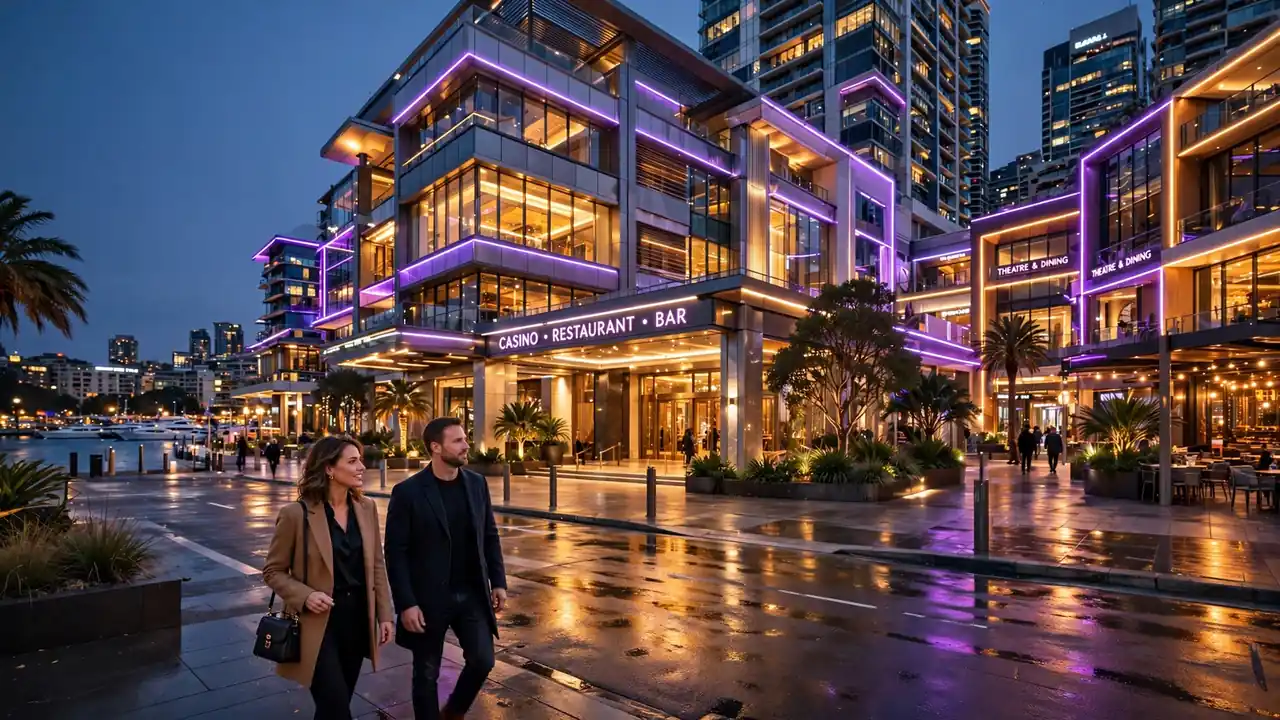
A stay near a casino is often imagined as a single arrangement: a room, an evening out and an easy return at the end of it. In practice, those are separate decisions. A hotel may be close to a venue without being connected to it; a booking may mention casino access without including any special benefit. The distinction matters more than the promotional language suggests.
For Adelaide, the phrase “accommodation near the casino” describes a useful aim, not a particular property or a measured distance. “Near” can mean a short walk, a brief drive or simply the same part of the city. Without a confirmed address and route, those impressions cannot be converted into a reliable journey time. Maps, transport arrangements and the location of the actual entrance all shape the last stretch.
The same restraint applies to accommodation deals. A package can sound generous while leaving the practical terms in small print: whether the room rate changes by date, what is included, whether a cancellation charge applies, and whether a stated benefit is available throughout the stay. A promotion is not a saving until its conditions are understood and the total price is compared with an ordinary booking. The word “deal” does little work on its own.
Casino promotions are a different matter again. Their presence in a hotel advert should not be taken to mean that a room booking includes a gaming benefit, or that a venue promotion is an accommodation offer. Those categories are easy to blend in a headline and less easy to untangle at checkout. A neat package is not necessarily a simple one.
- Verify the confirmed address and route
- Check the total price and date-specific rates
- Review cancellation charges and conditions
- Assume “near” implies a specific walking distance
- Rely on a “deal” label without seeing terms
- Assume a room booking includes gaming benefits
Opening hours and trading hours also matter to the shape of an overnight visit, but they should be treated as current operational details, not as a promise attached to a booking. Gaming machines may be part of the language used to describe a casino stay; that does not establish when a particular area is operating or what access a guest receives. Hotel access and casino access are not interchangeable privileges.
Parking belongs in the same practical calculation. A property’s own parking, nearby public parking and parking associated with a casino are distinct arrangements, each with its own availability and terms. The phrase “parking near the casino” does not establish a space, a fee or a direct route from car to venue. Those details can change the character of a night more than a polished room photograph does.
The sensible way to compare Adelaide casino accommodation is therefore to separate the claims: where the property is, how the journey works, what the room price covers, and whether any promotion has conditions. These are ordinary checks, not signs of distrust. Travel marketing tends to compress distance, access and value into one attractive sentence. The booking itself is less poetic.
A casino stay may suit a particular itinerary, but proximity alone cannot settle whether it is convenient or good value. The useful comparison is concrete: the confirmed location, the terms attached to the room, and the arrangements for getting to and from the venue. Everything else is atmosphere.
Contact Details, Bars and the Venue’s Unverified Practicalities
A phone number is useful only when it belongs to the right department and is still in service. For Adelaide Casino, contact details should be taken from a current, official venue listing rather than copied from an old directory entry or a third-party page. A general number may handle broad enquiries but not necessarily questions about a bar, a concert or parking. Where the purpose of a call matters, the department and opening hours should be confirmed alongside the number.
The same caution applies to maps. A pin can indicate a broad location without showing which entrance serves a particular visit, where a car park begins or whether access arrangements have changed. A map listing is a starting point, not a substitute for current directions from the venue. For an appointment or event, the practical details need to match that specific occasion.
Bars invite another kind of assumption: that a familiar venue name means a settled menu, service schedule or atmosphere. None follows from the word “bar” alone. A listing can change, and a bar’s availability may depend on the day or on an event taking place. Current opening information and any entry conditions matter more than a description repeated across several sites. Repetition is not confirmation.
Concert listings require particular care. A past performance, an announced event and a regular programme are different things, though search results can flatten them into one undated calendar. Dates, ticket arrangements and access details should be checked against an official event notice before plans are made. Without a current listing, no particular concert or schedule can responsibly be treated as confirmed.
Baccarat and craps raise a related issue. A casino’s general identity does not establish which table games are operating at a given time, or whether a specific game is available at all. A current venue notice is the appropriate place to verify a table-game listing; an old review or an undated photograph cannot settle the question. The distinction is modest, but useful.
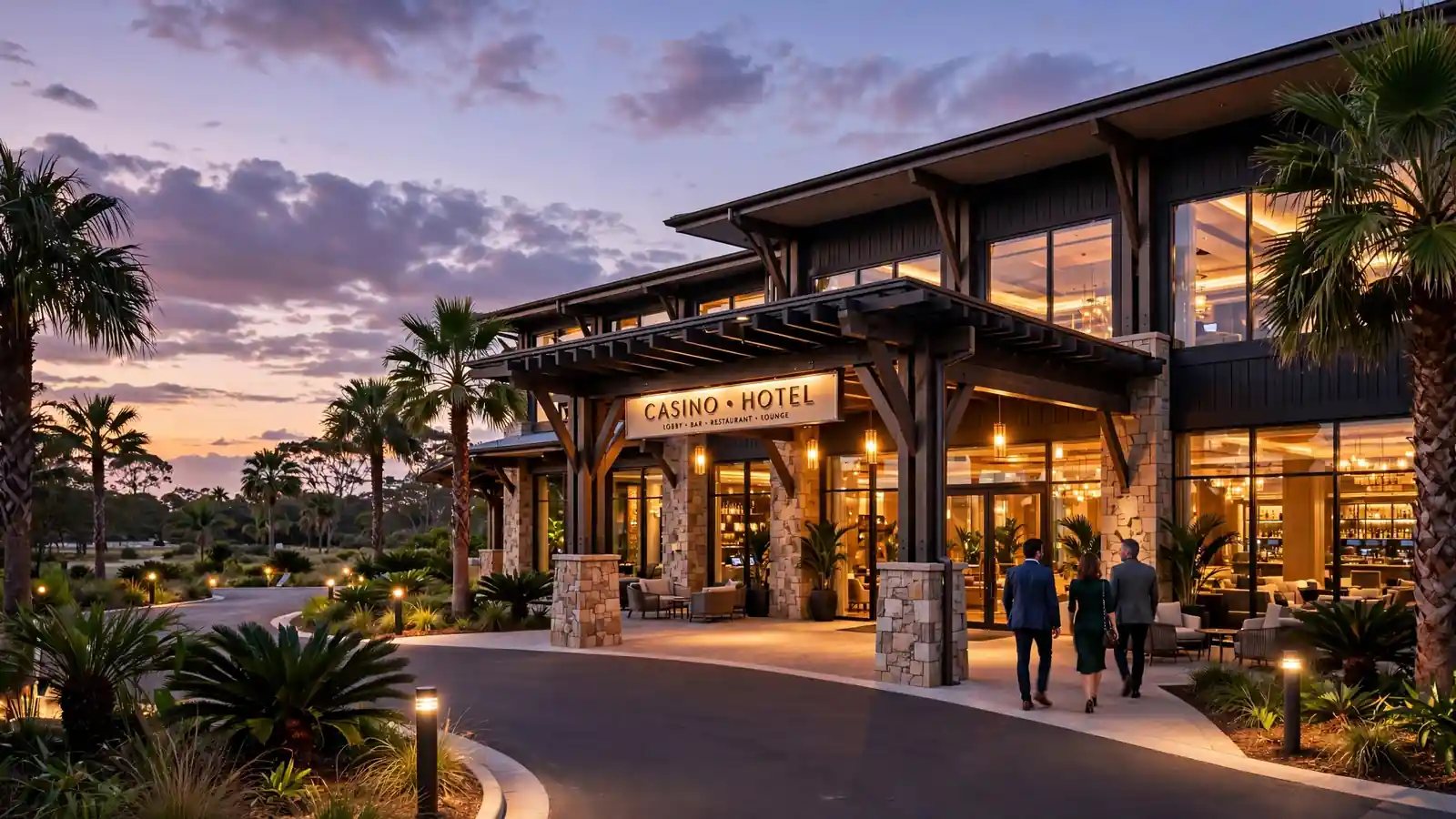
Car-park information is similarly specific. A label on a map does not by itself confirm that a facility is connected to the casino, open to visitors or available during an event. Before setting out, the relevant details are the current entrance, access arrangements, operating times and any conditions that apply. None should be inferred from the words “casino car park” in a directory.
The practical rule is plain: use current, official information for contact numbers, bar details, concerts, table games and parking, and check that it relates to the intended date. Search snippets can preserve old material long after the circumstances have changed. A quick confirmation is less glamorous than a plan, but more dependable than a confident guess.
Breakfast, Buffet Searches and the Online Bonus Fine Print
Breakfast and buffet dining belong to the practical side of a casino visit: they concern when a meal is served, what kind of meal it is and whether it fits around an outing. The wording of a request for breakfast at an Adelaide casino does not establish that a breakfast service or buffet is available. Nor does calling the venue a resort confirm that it offers resort-style dining. Those are separate claims, and a familiar label cannot do the work of a current menu or venue listing.
The same distinction applies to rewards and employment. A casino rewards programme would concern membership and benefits; job searches concern vacancies and hiring. Neither tells anything reliable about breakfast arrangements. Keeping these subjects apart matters because search language often compresses a whole plan into a few words: a meal, a stay, a job or a benefit. The words are a starting point, not a booking confirmation.
What an online bonus can actually require
Bonus language is more consequential when it concerns online gambling. A free-spin offer can sound immediate, while the winnings attached to it may remain unavailable for withdrawal until wagering conditions have been met. A report published by psu.com describes free-spin winnings with wagering requirements in the range of 20x to 50x. Separately, a specialist review has reported a 30-times wagering condition for free-spin winnings. These are attributed examples, not a universal schedule; the terms of a particular offer can differ.
The arithmetic is only part of the restriction. Bonus rules may limit the amount that can be withdrawn, set a maximum cashout or allow winnings to be voided if conditions are breached. The headline offer, therefore, is not the same thing as withdrawable money. Fine print is not fine in consequence.
This distinction also needs a legal boundary. Under Australia’s Interactive Gambling Act 2001, operators may not provide real-money online casino games—including pokies, blackjack and roulette—to people physically in Australia. An online bonus does not change that prohibition, and this discussion is not an invitation to use one. Offshore services are not regulated under Australian law; access may be blocked, and there is no local licensing framework that makes an offshore casino a lawful Australian provider.
Region controls can operate through a player’s IP address, which indicates geographic location. A VPN may make that location appear different, but using one to reach region-blocked pokies sites breaches the site’s terms and can lead to account suspension. It is not a dependable shortcut around the legal position.
Attention Using a VPN to access region-blocked pokies sites breaches site terms and can lead to account suspension.
Breakfast and bonus searches may sit beside one another on a results page, but they describe entirely different decisions. One concerns a meal whose availability needs confirmation; the other concerns an online offer within a market where Australian operators cannot provide real-money casino games. A promotion cannot make the latter lawful.
Spa, Address and Dress-Code Searches Without Invented Details
An address is more than a pin on a map. It separates the casino from the city around it: the entrance from the street, the venue from nearby businesses, and a planned visit from an assumption based on a name. For Adelaide, the practical value lies in checking a current venue listing before setting out. A familiar label is not a substitute for a street address, and map results can refer to different places or services.
The same care applies to the idea of a spa. A casino and a spa belong to different kinds of hospitality: one associated with gaming and entertainment, the other with treatments and rest. Their proximity in a phrase does not establish that they share a building, operate under one booking system, or offer a combined day out. The distinction matters because spa searches can lead to businesses near a casino rather than services within it. A treatment menu, opening hours and booking terms belong to the provider that actually offers them.
Dress codes carry a different sort of uncertainty. They are social rules made visible at the door, and can vary by venue, event or area. General ideas about what is suitable for an evening out are not the same as a published policy. A confident claim about formal wear, casual clothing or entry conditions would need a current statement from the venue. Otherwise, convention is being mistaken for regulation.

That small confusion is revealing. Hospitality often sells an atmosphere before it explains its boundaries; visitors are left to infer whether a place is a lounge, a gaming floor, a restaurant or all three. Yet an inferred mood cannot settle a practical question. A dress code should be treated as an operating rule, not a guess based on photographs or reputation.
Questions about games and employment also sit beside these practical concerns, but they require separate answers. A list of games should describe what is actually available, while careers information belongs to an employer’s current recruitment channels. Neither can be deduced from the venue’s name or from the fact that it is a casino. Those details change, and a search result may outlast the information it once carried.
For anyone planning a visit, the sound approach is unromantic: distinguish the venue from nearby businesses, and distinguish published conditions from custom. That leaves room for the city’s pleasures without turning proximity into proof. A spa nearby may be part of an Adelaide itinerary; it is not automatically part of the casino. A dress expectation may feel obvious to regulars; it is not necessarily a formal rule. The map and the mood are different documents.
Restaurants at Adelaide Casino: What Can Be Confirmed
Restaurant searches around Adelaide Casino point to a practical distinction: a place associated with a casino may be expected to offer dining, but the expectation is not a confirmed listing. The name alone does not establish which restaurants operate there, what they serve, or whether they are open on a particular day. Those details should not be filled in by inference.
That matters because restaurant information is unusually changeable. Outlets can alter their menus, service hours or booking arrangements; a listing that once described a venue may no longer reflect what is available. Without current, attributable information, naming a restaurant or describing its food would turn a plausible impression into a claim.
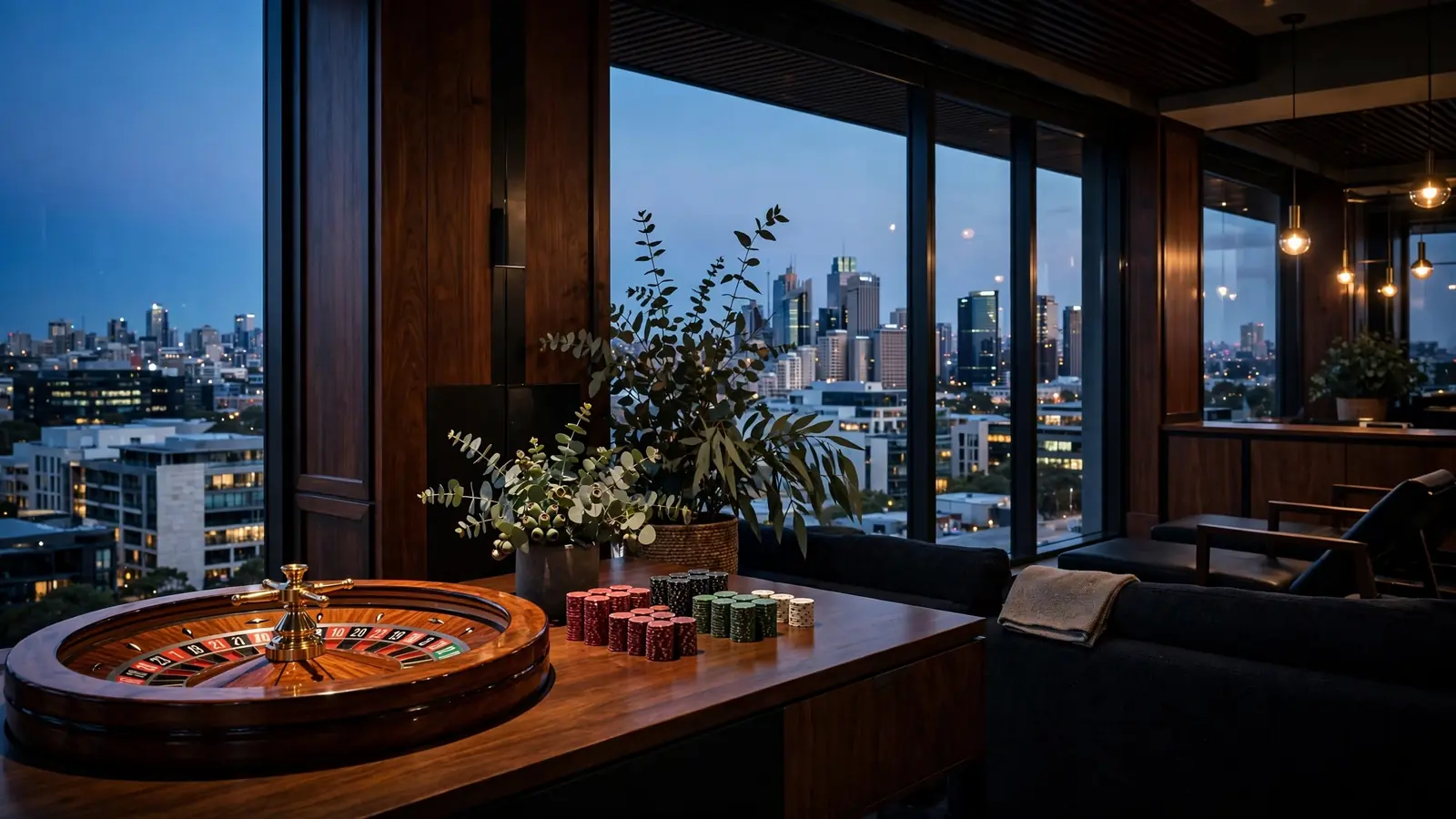
The same caution applies to the phrase “restaurants near the casino”. It can refer to businesses inside a complex, adjoining it or simply in the surrounding area. These are different choices, with different locations and access arrangements. A useful listing would make that distinction clear rather than treating proximity as proof of a connection to the casino.
“Adelaide Casino” and “casino in Adelaide” identify the subject of the search, but they do not settle those practical details. Nor does a mention of a rooftop bar confirm that dining is served there. A bar and a restaurant are not interchangeable categories, even when a venue combines them. The view, menu, table service and booking conditions would each need their own current confirmation.
For anyone comparing restaurant options, the dependable approach is to look for a current venue listing and check that it identifies the restaurant itself, not just the broader property. Menus and opening information should come from the business or venue’s current published material. If the listing is undated, vague about location or copied across directories, it offers little assurance that the details remain accurate.
That is not an argument against dining at a casino. It is a distinction between a search phrase and a usable plan. Restaurant names, cuisine and service arrangements are the details that turn a general idea into a decision; without dependable confirmation, none should be presented as settled.
A rooftop-bar search deserves the same restraint. It may express an interest in dining with a view, or it may concern drinks alone. The wording cannot establish that such a venue exists, that it serves meals, or that it is currently operating. A checked listing is the difference.
Food and Pool Queries, Kept Separate from Assumptions
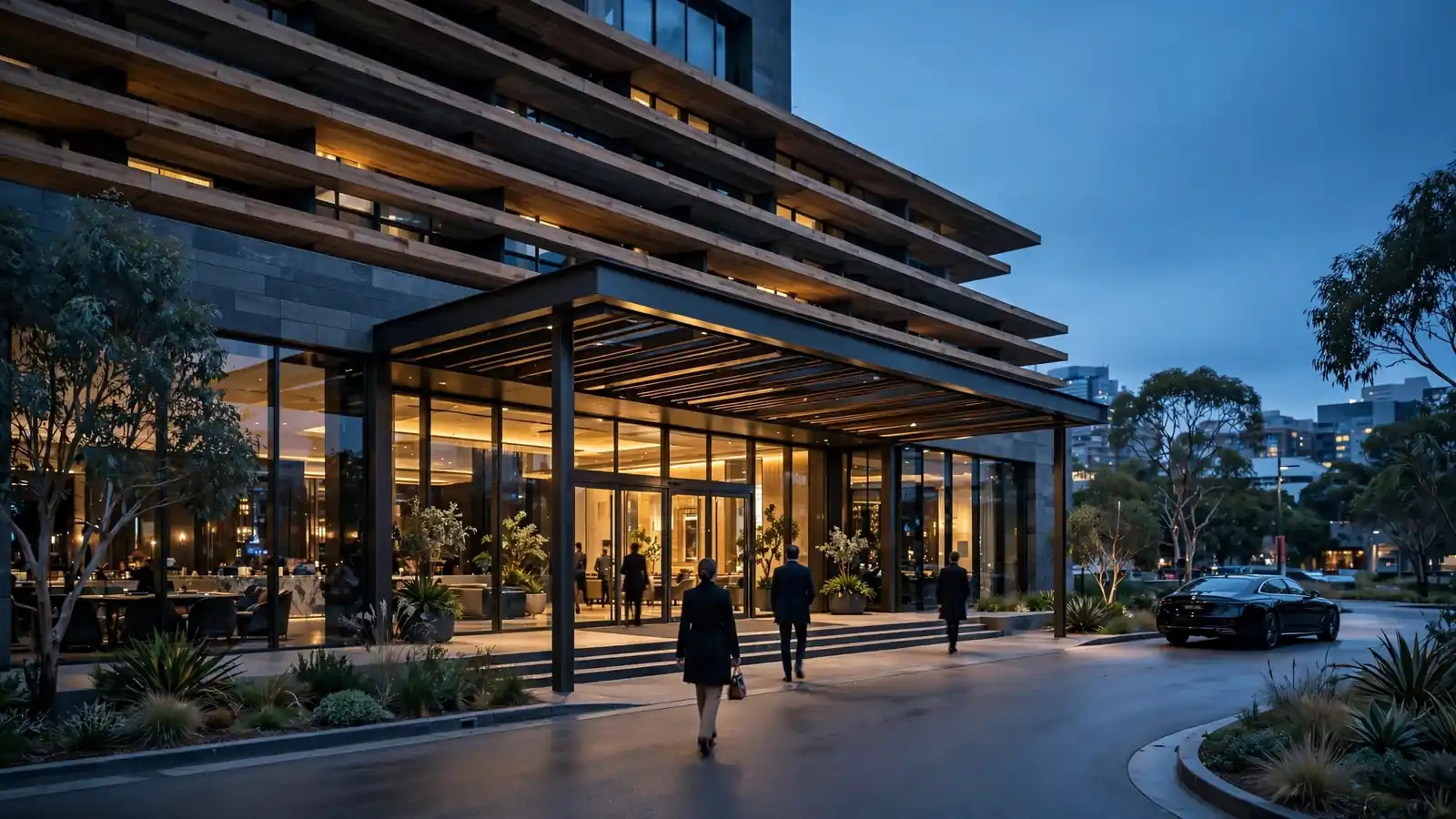
Food and a pool suggest two different kinds of visit: a meal taken as part of an outing, and time spent in a leisure facility. Their appearance together in thoughts about Adelaide Casino does not make either feature part of the venue. Neither a food court nor a pool can be presented as a confirmed facility.
That distinction matters because a familiar label can quietly turn into an expectation. “Food court” implies a particular arrangement of counters and shared seating; “pool” suggests a recreational space with its own access and practicalities. Those are concrete amenities, not decorative descriptions. Without confirmation, attaching them to the casino would give a visitor a false picture of what awaits.
The broader subject of food belongs to a different question from whether a dedicated court exists. A place may be associated with eating without having a food-court layout, and a search for casino food does not settle what is served, where, or when. Those details should not be inferred from the name of the venue. The same restraint applies to a pool: a leisure amenity should not be assumed simply because it appears alongside casino-related interests.
There is a small social history in the assumption. Large entertainment venues are often imagined as self-contained worlds, where meals, gambling and recreation sit under one roof. The idea is convenient; it is not evidence. In Adelaide, the careful description stops before turning that imagined package into a list of facilities.
For planning purposes, food-court and pool references are best treated as unconfirmed rather than as promises of on-site services. That leaves the useful distinction intact: interest in food or swimming may shape a visit, but it does not verify either amenity at the casino. No invented menu, layout, pool access or opening arrangement can make the picture more reliable. Better a modest description than a polished fiction.
Are online casino-style games restricted in Australia?
Yes. The Interactive Gambling Act restricts Australian-based operators from offering online casino games such as pokies, blackjack and roulette to players in Australia. Sports betting remains widely accessible and legal.
What is the legal status of offshore online casinos, and what does NSW gambling law say?
Australian players are not technically prohibited from using offshore casinos, but those platforms are not regulated under Australian law; Australian-run online casinos cannot offer these games to local players. In NSW, players must be at least 18 to use poker machines, and mandatory pre-commitment systems require them to set a loss limit before playing.
What are the bonuses and wagering requirements?
Free-spin winnings commonly carry wagering requirements of 20x to 50x, and one stated requirement is to wager those winnings 30 times before withdrawing. Pokies typically contribute 100% toward wagering requirements.
Published by the Big Candy Casino team.