New Australian Online Pokies: What the Claims Mean
 Available in AU
The term can refer to a recent release, a website or a promotion, while Australian wording does not establish local regulatory approval.

Table of Contents
- What “New Pokies” Can—and Cannot—Mean in Australia
- Reading Claims About the “Best New” Online Pokies
- PayID Searches and the Limits of What Can Be Verified
- New Zealand and Microgaming Search Terms: No Verified Releases
- Real-Money Play and the Meaning of a New Release
- E-Wallet and Login Claims Without Product Evidence
- Bonus Terms and the Disputes They Can Create
- No-Deposit Bonus Searches and Unsupported PayID Offers
- Pokies Games and Megaways: What the Evidence Does Not Establish
- A Cautious Reading of “New Pokies” Claims
What “New Pokies” Can—and Cannot—Mean in Australia
In Australia, “new pokies” is not a straightforward description of a local online casino market. The phrase can suggest recently released games, but it can also be used loosely for a website, a catalogue, or a promotional claim. Those meanings should not be collapsed into one. A newly published webpage is not evidence of a newly released game, and an operator’s use of Australian language does not make its service Australian-regulated.
The distinction begins with the law. The Interactive Gambling Act 2001 prevents online casino operators from providing real-money slot games to people located in Australia. The prohibition applies to the service offered, not to the wording chosen for a website. Online casino-style games fall within the restricted category even when presented under the familiar local term “pokies”. In this respect, the language is local; the legal permission is not.
That makes “new online pokies in Australia” an especially slippery phrase. It may describe an Australian audience encountering an offshore website, rather than a game supplied by a casino licensed to operate locally. There is no domestic licence for an online casino to offer real-money pokies to Australian residents. A website can still display Australian references, accept visits from Australians, or label a page as being for Australia. None of those details changes the legal status of the service.
Choosing new online pokies in Australia is easier when you can check the practical details available for each operator. This list provides a concise reference to the supplied licensing, deposit and payout information.
Payout speed: crypto under 1 hour, PayID 1-3 business days · Min. deposit: A$20 (A$30 to qualify for the bonus) Ricky Casino lists crypto payouts in under an hour and PayID payouts in 1–3 business days. The minimum deposit is A$20, or A$30 to qualify for the bonus.
License: Curacao Gaming Control Board OGL/2023/176/0095 (Hollycorn N.V.) Neospin is listed with a Curacao Gaming Control Board licence, OGL/2023/176/0095, held by Hollycorn N.V.
License: Curacao · Payout speed: crypto 30-60 minutes, fiat 1-5 days · Min. deposit: A$10 Wild Tokyo lists a Curacao licence, crypto payouts in 30–60 minutes, and fiat payouts in 1–5 days. Its minimum deposit is A$10.
License: Curacao Gaming Control Board OGL/2023/174/0082 (Dama N.V.) SpinsUp is listed with a Curacao Gaming Control Board licence, OGL/2023/174/0082, held by Dama N.V.
License: Tobique Gaming Commission · Payout speed: crypto ~10-15 minutes, fiat 1-5 days · Min. deposit: A$30 SkyCrown lists a Tobique Gaming Commission licence, crypto payouts in approximately 10–15 minutes, and fiat payouts in 1–5 days. The minimum deposit is A$30.
License: Curacao – Antillephone N.V. (Versus Odds B.V.) · Min. deposit: EUR 20 Thor Casino is listed with a Curacao licence from Antillephone N.V. (Versus Odds B.V.). Its minimum deposit is EUR 20.
License: Curacao Gaming Authority (Jumpman Gaming Ltd) DragonSlots Casino is listed with a Curacao Gaming Authority licence associated with Jumpman Gaming Ltd.
License: Curacao eGaming (Roby Games Ltd) Roby Casino is listed with a Curacao eGaming licence associated with Roby Games Ltd.
License: Curacao OGL/2024/1335/0780 · Min. deposit: EUR 20 Vegaz Casino is listed with a Curacao OGL/2024/1335/0780 licence. Its minimum deposit is EUR 20.
License: Curacao Gaming Control Board (TechSolutions Group N.V.) Bizzo Casino is listed with a Curacao Gaming Control Board licence associated with TechSolutions Group N.V.
The operators discussed in this context hold licences issued offshore, principally by Curacao eGaming or the Anjouan Gaming Authority. These are foreign licensing arrangements, not Australian authorisations. The distinction is more than a difference in paperwork: it marks the boundary between an overseas operator’s regulatory framework and the protections and rules applying within Australia. A foreign licence should not be mistaken for local approval.
There is a further complication. Offshore online casino services are subject to active blocking and enforcement in Australia, and advertising such services to Australians is prohibited. The law is directed at operators and advertising, rather than imposing a fine or criminal charge on an individual merely for playing offshore. That does not turn the service into a locally regulated one, nor does it make an offshore licence an Australian safeguard. A blocked or restricted service can remain visible in discussion without being an authorised domestic offering.
The word “new” can therefore carry several different implications, none of which should be assumed from a label alone. It might mean a site has refreshed its pages, that its catalogue has changed, or that a game is being described as recently added. It could also be a marketing phrase designed to make an established offering sound current. Without dependable release information, the label does not establish when a game appeared or where it is legally available. Newness is a claim about time; legality is a question of jurisdiction.

This matters because search results and website copy often flatten those questions into a single Australian-facing promise. A page may speak to Australians while its operator is based offshore and licensed elsewhere. The appearance of Australian terminology can make that arrangement seem ordinary, but familiarity is not regulation. Nor does a name such as “best new pokies Australia” establish that there is a locally licensed selection to rank. Those are words that can be put on a page; they are not proof of a lawful local market.
The rules also say something about the country that made them. Australia has chosen to prohibit the provision of real-money online casino games to people within its borders, rather than create a domestic licensing route for online pokies. That choice sits alongside the very visible cultural history of land-based pokies, a reminder that a familiar form of gambling does not automatically acquire the same status in every setting. The machine may be recognisable; the service around it is what the law addresses.
For this reason, “new pokies Australia” is best understood as a description of language used around an offshore-facing subject, not as evidence of a locally authorised launch. The same caution applies when a page calls a collection Australian or presents a foreign licence as if it were domestic oversight. The important distinction is not whether a website uses local vocabulary, but whether the activity it describes is permitted under Australian law. On this point, the boundary is clear. The marketing language is not.
Legal Status
The Interactive Gambling Act 2001 prohibits online casino operators from providing real-money slot games to people located in Australia, regardless of the website’s language or licensing.
This material is affiliate content and may include sponsored links. That disclosure identifies a commercial relationship; it does not alter the legal position of online casino services or amount to an endorsement. A label can travel easily across a webpage. Regulatory authority cannot.
Reading Claims About the “Best New” Online Pokies
“Best” sounds like a verdict reached after comparison. In a list of newly released games, that comparison would need something concrete to compare: identifiable titles, evidence that they are new, and a clear basis for judging them. A page can use the language of a ranking without supplying those foundations. The confident heading is easy; the work behind it is another matter.
A release claim is not established merely because a game appears under a “new” label. The label might refer to a recent launch, a recent addition to a catalogue, or simply a fresh promotional description. Those are different things. Without checkable details tying a named game to a release, the word “new” remains a sales signal rather than a useful fact.
The same problem affects claims about the “best new Australian online pokies”. A meaningful ranking would need to show which games were considered and what made one preferable to another. A list that supplies neither cannot support its own superlative. Nor does repeating the word “Australian” establish that a game was made for, licensed in, or legally offered in Australia. Search language is not a licence.

There is a more basic limit in the local market. Australian law prohibits locally licensed online casinos from offering real-money pokies to residents. A claim that a game is among the best does not alter that legal position, and the appearance of Australian wording beside a game does not create a locally licensed offer. In this context, a ranking should not be read as a dependable guide to real-money play available through a domestic online casino.
That distinction matters because casino language often compresses several different claims into one short phrase. “New pokies” may suggest recent releases; “best” suggests evaluation; “Australian” suggests local relevance. Put together, they can sound like a tested catalogue of current choices. But each part needs its own support. A recent date does not prove quality. A positive review does not prove a release date. A reference to Australia does not establish that real-money play is legally offered by a locally licensed casino.
The word “best” is especially elastic. It could refer to design, ease of use, a game’s features, or something else entirely. Unless the basis is stated and applied consistently, readers cannot tell whether the ranking reflects a real comparison or merely an editorial preference. The trouble is not that every ranking must use the same measure. It is that a ranking with no visible measure asks for trust while withholding the reason for it.
There is also a difference between describing a game and endorsing it. A factual account can identify a title and explain what is known about it. A promotional ranking goes further: it steers attention towards selected products. For Australian audiences, that distinction cannot be made harmless by calling the page a review or by adding a cautious sentence beside an invitation to play. The legal context remains the same.
- Look for identifiable game titles
- Verify substantiated release details
- Check for transparent ranking methods
- Trust a “best” label without evidence
- Assume a “new” label proves a release date
- Mistake search language for a legal licence
A headline promising the best new pokies, then, should be treated as a claim that needs evidence, not as evidence in itself. A reader may reasonably expect named games, substantiated release details and a transparent account of how the ranking was reached. If those elements are absent, there is no sound basis for treating the ranking as a verified comparison. That is not a list. It is a label.
Nor can a no-deposit phrase repair the gap. An offer attached to an unnamed or unsubstantiated game does not make the game’s release status clearer, and a promotional condition does not establish that the product is locally available through a licensed casino. The appeal of “free” language is familiar: it makes the commercial proposition seem to arrive without a cost. The legal and factual questions, however, do not disappear with the price.
The careful reading is therefore narrower than the headline’s promise. Claims about the best new online pokies cannot be treated as established rankings without identifiable games, support for their release status and a clear method of comparison. In Australia, they must also be read against the prohibition on locally licensed online casinos providing real-money pokies to residents. A polished list can imitate certainty. It cannot supply the missing basis for it.

PayID Searches and the Limits of What Can Be Verified
A payment label attached to “new pokies” can make a broad claim look like a practical service description. It is not one. A phrase linking PayID with newly released games does not, by itself, establish that a particular operator accepts that method, that it can be used by people in Australia, or that it is connected to any particular game. Those are separate claims, though search wording tends to press them together.
The same distinction applies to login language. A page or result that refers to access through a login does not establish what lies behind the sign-in screen, whether an account can be opened from Australia, or what payment options might appear after entry. Login is a doorway, not a description of the room. A confident label cannot settle questions about availability or terms.
There is a more fundamental Australian context. The Interactive Gambling Act 2001 prohibits operators from providing real-money online casino games, including pokies, to people physically in Australia. The legal line concerns the service offered by the operator; it does not turn on whether a payment method is named in a headline. Real-money gambling is for adults aged 18 and over, but an age threshold does not make a prohibited service lawful.
Operators discussed in connection with offshore casino services hold licences primarily from Curacao eGaming or the Anjouan Gaming Authority. Those are offshore licences, not Australian authorisations. Australian consumer protection laws do not apply to the offshore operators discussed. The difference matters because a familiar payment name can lend a listing an air of local normality, while neither the name nor the licence changes the legal setting.
Offshore Licensing
Operators typically hold licences from Curacao eGaming or the Anjouan Gaming Authority, which are foreign arrangements and not Australian authorisations.
Payment branding often does quiet work. It suggests ease, familiarity and a route from an ordinary account to an online product. Yet a payment reference cannot prove that a transaction is accepted, that a login is available, or that a service is lawful to provide in Australia. Nor does it establish that the advertised games are new. Each assertion needs its own basis; bundled together, they can sound more substantial than they are.
The phrase “new PayID pokies” therefore works as a label, not as a verified account of a product or payment arrangement. Adding “login” does not make it more precise. It merely shifts attention from the method of payment to the point of entry. Dry architecture.
This material is affiliate content and may include sponsored links. That disclosure identifies a commercial relationship; it does not validate claims about payment access or convert offshore casino promotion into neutral information. Australian restrictions on advertising online casino services remain relevant, whatever wording is used around a brand or a sign-in page.
The important distinction is between what a phrase implies and what it actually establishes. A payment name is not proof of availability. A login reference is not proof of access. And neither provides a workaround to Australia’s rules on real-money online casino services.
New Zealand and Microgaming Search Terms: No Verified Releases
A reference to New Zealand alongside new pokies can suggest several different things: that a game was made there, that it was released there first, or simply that it is being discussed in relation to that market. Those are separate claims.
The distinction matters because a game’s apparent geography is easy to overstate. A country name in a description does not, by itself, prove where a game was developed, who supplied it, or when it became available. Nor does it establish that a game is exclusive to that country. Treating the label as a confirmed origin story would turn an association into a fact.
The same care applies to searches for newly released games from Microgaming. The provider name is not enough to verify a title, its release date, or any feature attributed to it. Naming a game or describing its mechanics would therefore risk presenting an unsubstantiated claim as a catalogue entry.
This is not a minor matter of wording. A release claim can make a product sound current, distinctive, or tied to a particular place. In a crowded market, those impressions carry commercial weight. Yet a country label and a provider name do not independently support them. A sound account would need to distinguish a confirmed game identity from promotional phrasing and distinguish a documented release from a broad association.
The phrase “brand new” is especially elastic. It may refer to a recent launch, a game newly added to a particular site, or simply a title being presented as fresh. Without a specific, verifiable release, none of those meanings can safely be attached to a New Zealand or Microgaming title. The adjective does not supply the missing detail. It only makes the claim more emphatic.
Listing names would imply that each title had been checked and that its connection to the place or provider was established. Better to leave the catalogue empty than fill it with guesses.
The boundary is narrow but useful: New Zealand association is not proof of New Zealand origin, and a Microgaming label is not proof of a particular new release. Those distinctions prevent a search phrase from becoming an invented product claim. The wording may invite a list.
Real-Money Play and the Meaning of a New Release
A new release can describe a game’s arrival in a catalogue, but that label does not determine what kind of play is available in Australia. Online pokies may offer a free-play option or a real-money mode. The screen can look much the same in either case; the difference lies in whether stakes carry financial value.
Free play uses game credits without wagering money. It can show how a game behaves, but it is not equivalent to playing for cash: credits belong to the game and do not turn a simulated result into a payable win. A release advertised as available for free play therefore says little about whether real-money play is lawful or accessible to people in Australia.
The legal boundary is decisive. Under the Interactive Gambling Act 2001, operators must not provide real-money online casino games, including pokies, to people physically located in Australia. The prohibition is not softened by calling a game new, by hosting it overseas, or by presenting it as part of an online catalogue. A release announcement cannot make a prohibited service lawful.
That distinction matters because the language of gaming platforms often compresses several different claims into one. “Available” may mean visible in a catalogue, accessible in a free mode, or playable for money somewhere else. Those meanings are not interchangeable. In the Australian context, a statement about real-money availability cannot be treated as a neutral extension of a free-play listing.
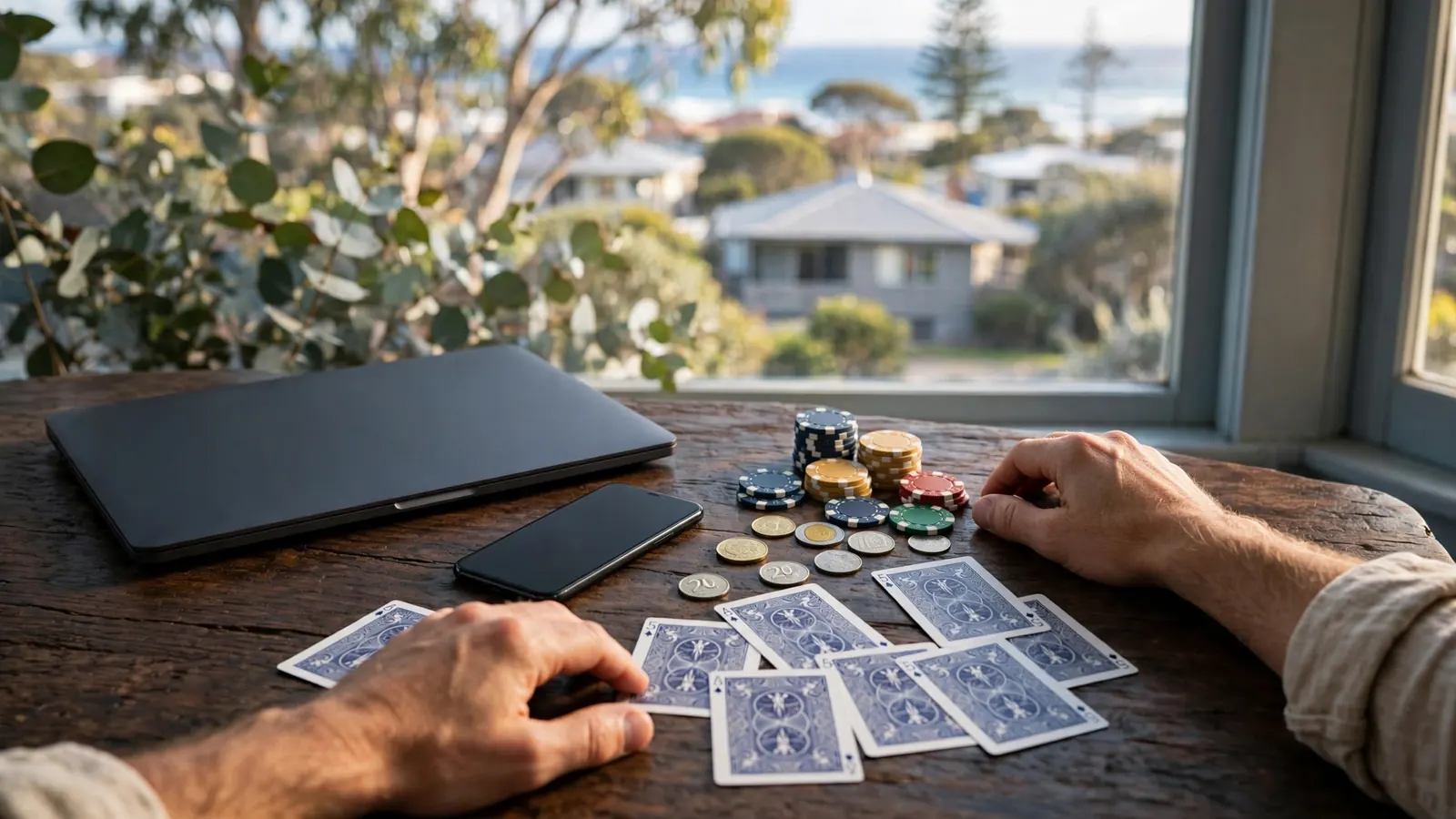
The phrase “new release pokies” can also suggest a simple sequence: a game arrives, players try it, and the market absorbs it. Yet a release date alone would establish only when a product was presented, not whether Australians could lawfully stake money on it. The commercial calendar and the legal map are separate things.
That separation has a social history. Gambling rules draw a line between entertainment offered without a cash stake and services that invite people to risk money. The line may seem narrow on a screen, where buttons and symbols remain unchanged, but it reflects a larger public decision about which businesses may offer gambling to people in the country. A fresh label does not move that line.
For Australian residents, “real money” is therefore not merely a setting within a game. It describes a form of service that operators are prohibited from supplying to people in Australia. Free play and real-money play may sit beside one another in an interface, but their legal meaning is not shared. One is a simulation; the other crosses a boundary set by law.
E-Wallet and Login Claims Without Product Evidence
An e-wallet label can sound like a useful distinction: money held in a digital account, then used for online transactions. But the label does not identify a particular service, establish that it is accepted by an operator, or show how an account would be accessed. In claims about new pokies, those are separate matters, not details that can safely be inferred from a payment category.
The same applies to login language. A page title or promotional phrase that joins a wallet to a new game does not establish that a named product exists or that a particular login route is available. Nor does it explain who operates the service, what rules govern an account, or what happens if access is disputed. Those omissions matter because an attractive doorway is not the same thing as a reliable institution behind it.
Australia’s legal setting makes that distinction more consequential. Under the Interactive Gambling Act 2001, operators may not provide real-money online casino games, including pokies, to people in Australia. A foreign licence does not turn such an offer into a locally authorised service. Australian consumer protection laws do not apply to the offshore operators discussed in this context, leaving a substantial gap between the familiar appearance of an online account and the protections a local consumer might expect.
A purported list of new pokies needs identifiable entries before it can mean much. A heading alone cannot establish release status, a provider, a payment arrangement or even which product is being described. Where no named products can be substantiated, presenting a list would give uncertain claims the appearance of an inventory. The form would be tidy; the information would not.
Account access also deserves a less theatrical reading than promotional language tends to invite. A login screen is a technical feature, not proof of licensing, safety or a remedy if funds become inaccessible. And an e-wallet reference, on its own, is not evidence that any specific wallet works with any particular service. No procedure should be presumed from the label.

This is editorial material and may include sponsored links. That disclosure does not make a prohibited casino offer acceptable, nor does it convert an offshore service into a locally protected one. Real-money gambling is restricted to adults aged eighteen and over, but age does not change the legal position of operators offering prohibited services in Australia.
If a withdrawal is held up, sending more money to release it can deepen the loss rather than resolve the dispute. Digital transfers to an incorrect address may be irreversible and generally unrecoverable. The important distinction is not between one login label and another. It is between a claim and an accountable service.
Bonus Terms and the Disputes They Can Create
A bonus can look straightforward until its wagering contribution rules are read game by game. The key distinction is how much each stake counts towards any wagering requirement attached to the bonus. If those rules are unclear, a player may believe play is progressing while the operator calculates it differently. That gap is fertile ground for a dispute.
Pokies and table games may contribute at very different rates. Table-game play can count at 0%, while pokies can count at 100%. Some high-return-to-player slots may instead be capped at 50%. A balance that appears to be moving towards a requirement can therefore make little or no progress when the chosen game contributes less than expected.
The percentages describe contribution, not the chance of winning or the value of a spin. A 100% contribution means eligible pokies play counts in full under the stated rule; it does not promise a return. Nor does a game’s return-to-player label settle the question of how its play is treated. The terms do that, if they are clear.
Wagering Contribution Examples
- Pokies: May contribute at 100% or be capped at 50% for high-return titles.
- Table Games: May contribute as little as 0% toward wagering requirements.
That distinction matters when a bonus is associated with newly introduced pokies. The game’s novelty says nothing by itself about whether its stakes qualify, or at what rate. A title may sit in a category with one contribution rule while another game is treated differently. Ambiguous wording leaves room for the operator’s interpretation to prevail after play has begun.
Maximum bet limits create a separate fault line. Bonus conditions may set a ceiling on the stake permitted during bonus play, and breaching it can result in that play being voided. The consequence is not merely a smaller contribution: bonus play itself may be disallowed. If the limit, the games it covers or the way it applies is difficult to locate, disagreement is hardly surprising.
The dry detail is the consequential one. A bonus label is not the rulebook; contribution rates and maximum-bet conditions determine what counts and what may be removed. In disputes, the difference between a broad promotional description and the operative terms can matter more than the game’s name. Small print, large consequences.
No-Deposit Bonus Searches and Unsupported PayID Offers
A no-deposit bonus linked to PayID sounds like a neat little transaction: a new account, a payment label and a reward supposedly waiting before any money changes hands. But the phrase is not proof that an offer exists, that PayID is accepted, or that any stated conditions will be honoured. A promotional sentence can join familiar terms without establishing a working service behind them.
The legal setting matters more than the polish of the wording. Under the Interactive Gambling Act 2001, operators cannot provide real-money online casino games, including pokies, to people in Australia. Offshore operators may describe bonuses for Australian audiences, but that does not make the service locally licensed or turn the promotion into a lawful Australian casino offer. Offshore operators are also outside Australian consumer protection laws. A bonus can look generous on a screen and still leave the player with little practical recourse.
Bonus disputes have a less theatrical source: the rules governing wagering contributions. A site’s terms may count pokies differently from table games, or describe those contributions unclearly. That can leave a player believing a bonus has been cleared while the operator calculates progress another way. The disagreement is not solved by attaching PayID to the offer; a payment method and a bonus condition are separate matters.
The word “no-deposit” can also distract from the conditions that follow. Restrictions may govern eligible games, withdrawal access or the way bonus play is treated. If the rules are vague, the attractive headline does not clarify them. Fine print is still the real offer.
A stalled withdrawal calls for restraint, not another payment. Depositing more money to unlock funds is not a sound remedy. An operator may ask for checks, but a further deposit does not establish that a payout will follow.
This material is affiliate content and may contain sponsored links; that disclosure does not verify or endorse an offer. In this market, the combination of a no-deposit bonus and PayID remains a promotional claim, not a dependable basis for treating an offshore casino service as available or protected. Dry arithmetic, dressed as a gift.
Attention: Depositing more money to unlock a stalled withdrawal is not a sound remedy and can deepen financial losses.
Pokies Games and Megaways: What the Evidence Does Not Establish
A game title can travel faster than the details attached to it. “New” may appear beside a familiar label, while a named format such as Megaways gives a listing an air of precision. Neither word, on its own, establishes which game is being described, who made it, when it appeared or what its rules are. A confident label is still only a label.
That matters because game-specific claims invite comparison. A supposed recent release might be described as having distinctive features, or as part of a particular series, but those statements need identifiable details behind them. Without those, a catalogue assembled from promotional language would make the language look like evidence. It would not help distinguish a release from a rebranded listing, a title used in several contexts or a claim repeated without clarification.
Megaways is especially easy to treat as a complete description when it is only a search term attached to a game. The word alone cannot establish the title, release timing or any particular feature. Nor can it support a judgement about whether one game is better than another. The missing particulars are not small print; they are the substance of a game-specific account.
There is a further distinction between the way a game is encountered and the claims made about it. Online pokies can be available in free play or real-money play. The choice of mode does not, by itself, confirm that a game is newly released or that a description of its mechanics is accurate. Free access is not a release date. A real-money label is not a catalogue.
In Australia, that distinction sits within a tightly drawn legal setting: locally licensed online casinos cannot offer residents real-money pokies. The point here is not to turn a game name into an invitation, or to imply that a particular title is available. It is to keep descriptions separate from assumptions about access and status.
A credible account of a named game would need to identify the game and substantiate the claims made about it. Without that grounding, neither “new” nor Megaways can carry the weight of a recommendation. The terminology may be familiar; the particulars still matter.
A Cautious Reading of “New Pokies” Claims
“New” can sound like a simple description of timing. In casino advertising, it can also lend an old promise the shine of a fresh one: a title may be presented as newly added, newly available or newly prominent, without those phrases meaning the same thing. A date alone would not settle what is being offered, or under what rules.
In Australia, the more important distinction is legal. Locally licensed online casinos cannot offer real-money pokies to people in Australia. The label “Australian” on a page or promotion does not change that boundary, and an offshore licence is not an Australian one. The difference is not cosmetic. It determines which protections and avenues of complaint are available.
Australian consumer protection laws do not apply to the offshore operators discussed in this context. That leaves a considerable gap between polished language and practical recourse if a dispute arises. A claim can look precise while saying little about the conditions behind it. Newness, like a bright sign in a shop window, does not establish safety.
There is also a distinction between describing a market and promoting a service. This material is affiliate content and may include sponsored links; that disclosure does not turn a prohibited offer into a permissible one. Nor does it make a claim about a release independently reliable.
So “new pokies” is best read as a description used in promotion, not as proof of a particular release, Australian licensing or legal protection. The surrounding claims matter more than the adjective. The law draws its line plainly; the wording around it can be much less plain.
Can Australians use Bitcoin at online casinos for entertainment?
Bitcoin can be used to deposit at offshore casinos, but that does not make them locally authorised. Australian law prohibits online casinos from offering real-money pokies to residents, and Australian consumer protections do not apply to the offshore operators discussed.
Is verification required?
Yes. Operators may request additional verification at a first withdrawal or after cumulative deposits reach AUD 2,000–5,000; crypto checks may include signing a message from the deposit address or showing the sending transaction.
Are Bitcoin casinos legit?
The operators discussed hold offshore licences, mainly from Curacao eGaming or the Anjouan Gaming Authority, not Australian licences. Those licences do not make real-money online pokies authorised in Australia, and Australian consumer protection laws do not apply to these operators.
Prepared by the Big Candy Casino editorial staff.