
Casino Dice Games in Australia: Rules and Legal Limits
 Available in AU
From craps tables to online formats, the article explains how game mechanics, chance and Australia’s legal boundary shape casino dice play.

Table of Contents
- Dice Online, and the Australian Legal Boundary
- What Counts as a Casino Dice Game?
- A Dice Game Is More Than a Pair of Dice
- Craps: The Table, the Roll, and the Stakes
- Where the Dice Are Thrown
- Playing Dice Online Without the Table
- Rules, Bonuses, and the Arithmetic Behind Them
- Strategy, Chance, and the Limits of Control
- Live Dice and the Appeal of the Shared Table
- Casino Dice in 2026: A Narrow Field of Evidence
Dice Online, and the Australian Legal Boundary
A search for casino dice online can point towards websites that accept Australian payments and display games to Australian visitors. Their presence on a screen, however, is not evidence that the service is permitted to operate here. In Australia, the central distinction is between an offshore site being reachable and an operator being allowed to provide real-money online casino games to people in the country.
The Interactive Gambling Act 2001 sets that boundary. It prohibits operators from providing online casino-style gambling to customers physically located in Australia. The category includes table games and other casino formats, not merely one particular game with dice. A site’s foreign licence does not turn the service into a locally authorised one: offshore casinos may accept Australian payments while operating under licences issued elsewhere.
That distinction can sound abstract until it is put beside the machinery of enforcement. The Australian Communications and Media Authority, or ACMA, is the federal agency responsible for enforcing the Act and monitoring compliance with federal interactive gambling laws. It can ask Australian internet service providers to block websites that provide prohibited interactive gambling services or advertise them in Australia. A blocked address may be replaced by another, and an offshore operator may still be visible from abroad; neither circumstance changes the rule governing what operators may offer to Australians.
Choosing a casino dice game in Australia calls for a quick check of the details that shape your options, including available licensing information, payment speeds and minimum deposits. Use these short verdicts as a reference when deciding what to look into further.
Payout speed: crypto under 1 hour, PayID 1-3 business days · Min. deposit: A$20 (A$30 to qualify for the bonus) Ricky Casino lists crypto payouts in under an hour and PayID payouts in 1–3 business days. The minimum deposit is A$20, or A$30 to qualify for the bonus.
License: Curacao Gaming Control Board OGL/2023/176/0095 (Hollycorn N.V.) Neospin lists a Curacao Gaming Control Board licence, OGL/2023/176/0095, held by Hollycorn N.V.
License: Curacao · Payout speed: crypto 30-60 minutes, fiat 1-5 days · Min. deposit: A$10 Wild Tokyo lists a Curacao licence, with crypto payouts in 30–60 minutes and fiat payouts in 1–5 days. Its minimum deposit is A$10.
License: Curacao Gaming Control Board OGL/2023/174/0082 (Dama N.V.) SpinsUp lists a Curacao Gaming Control Board licence, OGL/2023/174/0082, held by Dama N.V.
License: Tobique Gaming Commission · Payout speed: crypto ~10-15 minutes, fiat 1-5 days · Min. deposit: A$30 SkyCrown lists a Tobique Gaming Commission licence. Its stated payout times are around 10–15 minutes for crypto and 1–5 days for fiat; the minimum deposit is A$30.
License: Curacao – Antillephone N.V. (Versus Odds B.V.) · Min. deposit: EUR 20 Thor Casino lists a Curacao licence associated with Antillephone N.V. (Versus Odds B.V.). Its minimum deposit is EUR 20.
License: Curacao Gaming Authority (Jumpman Gaming Ltd) DragonSlots Casino lists a Curacao Gaming Authority licence associated with Jumpman Gaming Ltd.
License: Curacao eGaming (Roby Games Ltd) Roby Casino lists a Curacao eGaming licence associated with Roby Games Ltd.
License: Curacao OGL/2024/1335/0780 · Min. deposit: EUR 20 Vegaz Casino lists a Curacao OGL/2024/1335/0780 licence. Its minimum deposit is EUR 20.
License: Curacao Gaming Control Board (TechSolutions Group N.V.) Bizzo Casino lists a Curacao Gaming Control Board licence associated with TechSolutions Group N.V.
The scale of that enforcement is substantial. Since November 2019, ACMA has blocked more than 1,455 illegal gambling and affiliate websites following enforcement action. The figure includes affiliate sites as well as gambling services, so it describes a broad enforcement effort rather than a count of casino operators alone. It also shows why a website’s appearance in a browser is a poor test of its status. Access can be interrupted, and the address may change. A familiar-looking payment page is not a legal instrument.
There is also a reported difference in the number of services that have withdrawn from the Australian market since ACMA began enforcing the rules in 2017. One account puts the number above 210; another gives a figure above 190. Both describe services leaving after enforcement began, but they do not give the same count. The disagreement is best kept visible rather than made to disappear into a false precision.
The legal position for operators and the position for players are not identical. The prohibition is directed at supplying the service; Australian players are not criminalised simply for using an offshore gambling site. That does not make the arrangement locally approved, protected or equivalent to a service operating under Australian online-casino permission. It means only that the user’s legal position should not be confused with the operator’s.

This is a small but consequential difference. A person may encounter an offshore dice game, be able to make a payment, and still be dealing with a service that is prohibited from offering online casino gambling to people in Australia. The site’s own claims about its licence or accessibility do not erase that boundary. Nor does a successful deposit establish that future access, service or payment arrangements will be dependable.
The law is notably about the offer of the service, not about whether a digital game resembles a traditional casino table. An online casino dice game remains within the wider category of online casino gambling. Recasting it as a game of chance, a virtual table or a software product does not create a separate permission. The medium changes; the regulatory question does not.
That is why “available” needs careful handling in this setting. It may mean that an offshore page can be found, that it accepts Australian payment methods, or that a user has managed to open it. None of those meanings is the same as lawful local provision. ACMA’s blocking powers make the distinction concrete: a service can exist offshore and still be subject to measures intended to restrict its availability in Australia.
The country’s framework therefore leaves a narrow, sometimes confusing picture. Offshore operators may continue to exist and may attempt to serve Australians, while federal law bars them from providing real-money online casino services to people here. ACMA can pursue non-compliant services and seek access blocks, while players themselves are not criminally punished merely for using an offshore site. For anyone considering gambling, the relevant age threshold is 18 or older; that threshold does not alter the separate restriction on online casino operators.
Legal Boundary
Under the Interactive Gambling Act 2001, it is prohibited for operators to provide real-money online casino services to customers physically located in Australia.
A dice game’s online presentation can make it appear detached from place, as though a screen has dissolved the border that would matter to a physical venue. Australian law takes the opposite view. The customer’s location matters, and an offshore licence is not a substitute for permission to provide the service in Australia.
Reachable is not authorised.
What Counts as a Casino Dice Game?
A casino dice game is a game in which dice determine an outcome that matters to a wager. The dice are not merely decorative, nor are they there to add a flourish to a card game. Their face values, combinations or movement drive the result according to rules set before play begins.
That definition is narrower than “any game with dice”. A board game may use dice to move pieces around a track; a role-playing game may use them to settle an uncertain action. In those settings, the dice serve a larger game whose purpose is not necessarily gambling. In a casino dice game, the central event is the dice result and the way the rules connect it to a stake.

The distinction is practical, not ceremonial. A pair of dice does not turn every table into a casino game. What matters is the structure around them: a wager is placed, an outcome is produced, and the rules determine whether that wager wins, loses or is otherwise resolved. The dice may be thrown by a player, handled by a dealer or represented in another form. Their role remains the same if their result governs the bet.
The phrase can also describe games that look quite different from one another. Some depend on a particular total; others turn on combinations or on whether a result meets a stated condition. The shared feature is not a single set of rules, a particular table layout or even a fixed number of dice. It is the wager-led use of a random dice outcome.
This is why “dice game” and “casino dice game” are not interchangeable labels. The first names a tool or a broad kind of play. The second describes a gambling format, organised around stakes and outcomes. A game can involve dice without belonging to that category; conversely, the casino character of a dice game does not depend on whether the dice are physical objects or a visual representation.
The plain test is what the dice decide. If their result settles a wager under the game’s rules, the game counts as a casino dice game. If they merely help move a piece or add uncertainty to some other activity, dice alone do not make it one.
Casino Dice Definition
- A casino dice game is defined by a wager where the dice result determines the outcome.
- It differs from general dice use in board or role-playing games.
- The core requirement is a wager-led use of a random dice outcome.
A Dice Game Is More Than a Pair of Dice
Casino games that use dice form a family, not a single format with different decorations. The dice may decide whether a round succeeds, produce a number that settles a wager, or serve as one element in a larger table ritual. What changes from game to game is not merely the number of cubes. It is the role assigned to chance, and the way the table lets players take part in it.
Craps is the best-known member of the family, but it is not the template for every other dice table. In sic bo, three dice are shaken and revealed together, and wagers concern the result or a feature of it. The game’s shape is therefore closer to a spread of predictions than to a single unfolding contest. The dice speak all at once; the table divides their answer into possible bets.
Other traditions use dice in a more compact way. In chuck-a-luck, a set of dice is contained in a cage, and players wager on numbers they expect to appear. The apparatus makes the game visually distinct, but the underlying appeal is familiar: a small number of objects produces a bounded set of outcomes, while the table offers several ways to interpret them. A player is not necessarily betting on the same thing as the person beside them, even though both watch the same throw.

The count matters, but it does not define the experience on its own. A casino game with two dice can be organised around their total, around whether they match, or around whether a chosen number appears. Add a third die and the range of possible combinations expands; so does the number of ways a table can sort those combinations into wagers. Yet more dice do not automatically make a game more complex to understand. The layout, the language of the bets and the pace of settlement matter just as much.
That is one reason the phrase “dice game” can conceal as much as it reveals. It names the instrument, not the social machinery built around it. One game asks players to follow a sequence; another presents a result and settles several predictions at once. Some tables make the throw itself the centre of attention. Others make the printed betting area do more of the explanatory work. In each case, chance is dressed in a different procedure.
The variety also reflects a long-standing human habit: turning an uncertain event into a public one. Dice make randomness visible. They can be counted, shaken, heard and watched, and the rules decide which details of the result will matter. A card can stay hidden; a die announces its face. The table then turns that exposed result into a shared vocabulary of wins, losses and near misses.
That vocabulary is not universal. A game can use two dice without resembling another two-dice game, just as a third die can alter the possible wagers without changing the basic pleasure of watching chance resolve. The broad category is held together by the objects, but its members differ in rhythm, structure and attention.
Craps gives that family its most recognisable table image, but the family is wider than the image. The distinction matters: dice are only the beginning.
The most recognisable family member, featuring a broad layout and a social, collective experience.
A game where three dice are shaken and wagers are placed on predictions of the combined result.
A game using a cage to contain dice, where players wager on specific numbers expected to appear.
Craps: The Table, the Roll, and the Stakes
Craps is the casino dice game most readily pictured as a table game: a broad layout, a pair of dice and a group of players following the same changing result. Its reputation is larger than its equipment. The dice are ordinary in appearance, but the table gives their fall a public meaning. A roll is not merely a number; it becomes an event around which bets, attention and expectation gather.
That collective quality helps distinguish craps from quieter dice games. Players may take different positions and place different kinds of wagers, yet they remain oriented towards a shared outcome. One person rolls; everyone else watches the result through the language of the table. The game therefore has a social shape as well as a mathematical one. It turns a private calculation into a small public drama.
The table is central because it organises that drama. Its marked areas give wagers their places and give players a visible map of what is at stake. A craps layout can look complicated to someone unfamiliar with it, not because every mark represents an entirely separate game, but because several betting choices coexist around the same sequence of rolls. The pattern is layered. Some bets relate to the central course of play, while others address particular outcomes or moments. The precise rules matter, but the larger impression is of a single game with multiple ways to take a position within it.
That structure is part of craps’ particular appeal and its difficulty. The game is often described through the excitement of the throw, yet much of its character lies in the interval between throws: players deciding where to place a wager, tracking how the round develops and interpreting the layout. The dice supply the uncertainty; the table supplies the framework in which that uncertainty is divided into choices. Chance does not become controllable merely because it has been given a diagram.
The stakes are consequently more than the amount put forward. They include the way a player understands the game: whether a wager follows the main flow, depends on a specific result, or is taken as a side option. Those distinctions shape how the table feels, even when all bets ultimately depend on dice. A crowded layout can make the game seem like a collection of separate propositions. It is still one game, held together by the same rolls.

Craps also occupies a distinctive place in the wider family of casino dice games. Other games may use dice as instruments for generating outcomes, but craps makes the table itself part of the identity. Its vocabulary, arrangement and shared attention have become inseparable from the image of casino dice. That does not make it the only casino game built around dice, nor does it make its surface complexity a measure of its depth. It makes craps the most recognisable meeting point between dice, wagers and a table designed to keep many people watching the same uncertainty.
The spectacle is carefully arranged. The outcome is not.
Where the Dice Are Thrown
A casino dice game begins, in the imagination, with a small physical ceremony: dice lifted, shaken, released, then watched as they cross a surface and come to rest. The appeal is not only the numbers. It is the visible passage from intention to chance, performed in a space where other people can follow the same moment.
A table gives that action a boundary. Its felt surface slows the dice; its marked layout makes the possible outcomes legible to those gathered around it. Players’ attention moves with the roll, while the dealer’s presence keeps the sequence orderly. Even a quiet throw can command a pause. The dice are ordinary objects, but the room lends their movement a little theatre.
That theatre belongs to the body as much as the game. A hand has to release the dice; the table receives them; everyone else waits for them to stop. The pause is part of the event. It is also a social arrangement: one person acts, others watch, and the result becomes shared before it becomes anyone’s private calculation.
A screen can reproduce the image of dice tumbling, but the resemblance has limits. Digital dice are rendered movement, not objects travelling across felt. There is no shared physical surface, no sound carried through a room, no moment in which a thrower’s gesture is visible to the table. The interface presents an outcome; the casino table stages an action.

That distinction is easy to overlook when the symbols are identical. Yet a pair of dice on a screen and a pair thrown in a casino do not occupy the same kind of space. One is a visual representation; the other is a small public performance, shaped by hands, materials and witnesses. The numbers may be the point of the game. The room explains why people remember the roll.
Playing Dice Online Without the Table
A digital dice game replaces the table’s physical sequence with a screen. There is no felt surface to lean across, no hand passing the dice, and no sound of a throw to mark the moment when a decision becomes an outcome. Instead, the interface presents a game area, controls and a result. The ritual is compressed into clicks and animation.
That change can make the game appear simpler than its physical counterpart. A player may see a pair of dice, a button to begin a round and a display of the result. But the screen is not merely a camera pointed at a table. In an automated game, software determines and presents the outcome; the animation is its visible expression. A digital roll may look like a physical throw, but appearance alone does not establish how a game produces its result.
The basic sequence is usually legible even when the game’s design varies: a round is selected, any available choices are made, the roll is initiated, and the result appears. The interface then indicates whether the selected outcome has won or lost, and whether the round is complete. That is the digital equivalent of the pauses and gestures that organise play around a table. The screen gives each stage a button, label or animation.
The practical question is not only how to make a roll. It is what the controls mean before the roll begins. A displayed stake, selection or payout condition forms part of the game’s terms, not decoration. A result can be easy to read while the underlying conditions are less prominent. Animation is good at making an event feel immediate; it is less good at explaining what the event costs.
Some interfaces may offer a free-play or demonstration mode. In that setting, the same visual language can be used without a real-money stake, but the resemblance to wagering should not be mistaken for equivalence. A practice screen can show how buttons and outcomes are presented; it cannot establish that real-money play is lawful, or that a particular game behaves in the same way under different conditions. Free play is a format, not a legal permission slip.
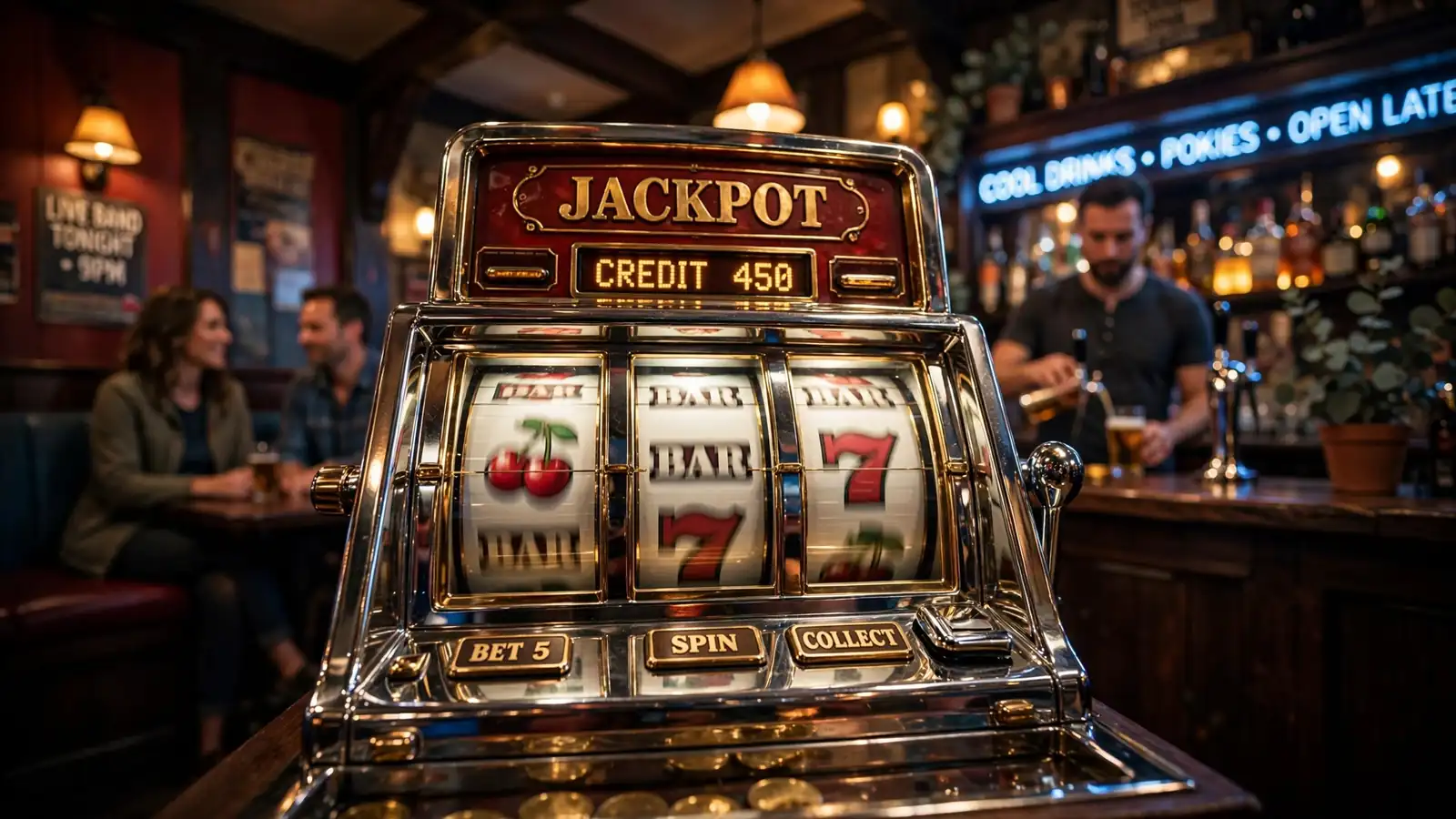
For Australians, that distinction matters. Real-money online casino games are prohibited when offered to people in Australia under the Interactive Gambling Act 2001. The online appearance of a game does not change that boundary. This section describes a digital format, not a route to access offshore gambling.
Digital play also alters the pace. A physical table has visible pauses: dice are gathered, the next turn begins, and other people’s presence can interrupt the rhythm. An interface can move from one round to the next with very little friction. That efficiency is not a neutral feature. When the next action is always close at hand, the player has fewer natural cues to stop and consider what has just happened.
A careful reading of the screen therefore involves more than watching the dice. It means distinguishing the animation from the game’s stated conditions, checking what the available controls do, and noticing whether the display makes the cost and result clear. If the terms are obscure, the polished surface does not make them clearer.
This is the central difference between a table and a screen: the digital version makes the sequence compact, but not necessarily more transparent. The roll becomes an image and a button press. The consequences remain real wherever real money is involved—and, in Australia, real-money online casino play is not a lawful service for local customers.
Rules, Bonuses, and the Arithmetic Behind Them
The rules of a dice game describe what a roll means: which outcomes count, when a round ends and how a stake is settled. Promotional terms belong to a different ledger. They govern funds attached to an offer, not the dice themselves. Confusing the two can make a straightforward game appear simpler than the conditions around its money.
A bonus is not cash. It may be available for wagering, but withdrawing bonus-derived winnings can depend on meeting stated conditions. One specialist review describes an offer with a 40-times wagering requirement on a $100 bonus. On those terms, the calculation is $4,000 in bets before bonus-derived winnings can be withdrawn. That figure illustrates the arithmetic of that particular offer; it is not a universal rule for casino promotions.
Bonus Calculation
A player receives a $100 bonus.
The offer carries a 40-times wagering requirement.
The player must place $4,000 in bets before bonus-derived winnings can be withdrawn.
The multiplication is only part of the calculation. The terms may define which games count, whether a game contributes fully or only in part, and what happens if the conditions are not met. A specialist review has described blackjack as contributing only 10% towards a particular wagering requirement. In such a case, the displayed stake and the amount credited towards the requirement are not the same thing. The operator’s written terms, rather than the game’s familiar rules, determine the distinction.
Specialist reviews also describe wagering requirements in the range of 30 to 50 times for some bonus-derived funds. Such figures are descriptions of individual offers, not a dependable market standard. The relevant questions are practical: which balance is subject to wagering, which games count, how contributions are calculated, and what conditions apply before a withdrawal. If those clauses are unclear, the advertised bonus amount says little about what can ultimately be taken out.
This separation matters when comparing any casino dice game rules with a promotion. The dice rules can be read as a compact system of outcomes and settlement; bonus conditions add a second system, built around eligibility and withdrawal. A clear explanation keeps them apart instead of presenting promotional arithmetic as part of the game.
For anyone aged under eighteen, gambling is not appropriate. For adults, no rule set or bonus condition removes the possibility of loss; problem gambling can cause serious harm, particularly to vulnerable people. The terms may be printed neatly. The consequences are not.
Strategy, Chance, and the Limits of Control
A strategy in a dice game can organise decisions; it cannot command the dice. Knowing what a wager means, setting a spending limit beforehand and stopping when that limit is reached are forms of control over conduct, not over chance. No sequence of bets can make a future roll obey a pattern. The distinction is plain, though the table can make it feel negotiable.
The same applies across casino games that use dice. Familiarity may reduce confusion about choices, but it does not turn an uncertain outcome into a dependable one. A system that raises stakes after losses can make the consequences worse without changing the underlying uncertainty. Losses are not a debt owed by the next roll. Nor should gambling be treated as income: outcomes are uncertain, and there is no reliable method for converting play into wages.
That boundary matters beyond an individual session. Gambling harm can be serious, particularly for vulnerable people, while the costs are often discussed through figures gathered from pokies rather than dice tables. A report carried by gamble.com.au put Victorian poker-machine losses at $2.6 billion for the year it examined, more than $44.7 million above the 2015 figure. The same reporting said the Epping Plaza Hotel in Melbourne’s north generated more than $21 million from 100 machines over the year concerned. These are reports about particular periods and places, not timeless measures of every venue.

Reform arguments respond to that scale by asking how much freedom a machine should offer at the point of play. Senator Nick Xenophon and MP Andrew Wilkie proposed limiting poker-machine bets to $1. The proposal concerned pokies, not dice, but its logic reaches further: when a person’s choices operate inside a designed gambling environment, individual responsibility is only part of the story. The rules of the room matter too.
A player can choose whether to begin, how much to risk and when to leave. Those choices deserve respect, but they do not erase the responsibility of institutions to reduce harm. Being at least 18 is a basic threshold for gambling, not evidence that every risk has become manageable. Chance remains indifferent. The consequences are not.
Live Dice and the Appeal of the Shared Table
A live dice game borrows its meaning from the table as much as from the dice. In a physical casino, the roll is public: several people follow the same small movement, while the dealer’s handling gives the moment a human rhythm. A live-casino presentation tries to preserve that sense of occasion through a screen. The attraction is not simply seeing dice move; it is seeing an event unfold in company, even when the company is mediated.
That distinguishes live play from an automated game, where the interface presents outcomes without a human table setting. It also differs from being physically present in a casino. A screen can show a shared scene, but it cannot reproduce the room around it: the pauses, glances and incidental chatter that make a table feel social. The resemblance is selective.
The phrase “casino live dice” can suggest a fixed format, but the label alone says little about what a particular service actually provides. “Live” describes a mode of presentation, not a guarantee of conversation, visible procedures or any particular degree of interaction. Those details depend on the service, and should not be assumed from the name.
There is a wider cultural idea at work. Dice are among the plainest objects in gambling: small, visible, and apparently answerable to a single throw. A shared table turns that private uncertainty into a public ritual. People watch together, though the outcome remains no more communal than the chance that produced it.
For Australians, the distinction between a live presentation and an automated one does not alter the legal boundary around online casino services. The format may change the atmosphere; it does not change what the service is. A digital room can imitate the social grammar of a table. It cannot make the table physical, or make an online casino service permissible in Australia.
Casino Dice in 2026: A Narrow Field of Evidence
In Australia, casino dice sit at the meeting point of two very different subjects: games of chance and the law governing online gambling. The first has an old, tangible vocabulary—dice, tables, wagers, the fall of a number. The second is less romantic. The Interactive Gambling Act 2001 prohibits operators from providing real-money online casino games to people in Australia, including casino-style table games. A familiar game does not become a permitted service simply because its pieces are digital.
That distinction matters when a game is described as available to Australians. Offshore casinos may accept Australian payments while operating under foreign licences, but those licences do not authorise the provision of prohibited online casino services in Australia. The Australian Communications and Media Authority (ACMA) enforces the federal law and can ask internet service providers to block websites offering prohibited gambling services or advertising them. Access and legality are not the same thing. Nor are a foreign licence and local permission.
Are offshore casino sites legal in Australia?
While offshore sites may be reachable and accept payments, the Interactive Gambling Act 2001 prohibits operators from providing real-money online casino services to people in Australia.
What action does ACMA take against illegal sites?
ACMA can ask internet service providers to block websites that provide prohibited interactive gambling services or advertise them in Australia.
Are Australian players criminalised for using offshore sites?
No, the prohibition is directed at the supply of the service; players are not criminalised simply for using an offshore gambling site.
The law is directed at operators, not at making players criminals for using offshore sites. That does not make an offshore service safe, locally authorised or beyond enforcement. ACMA has blocked more than 1,455 illegal gambling and affiliate websites since enforcement actions began in November 2019. The agency has also reported that more than 210 illegal services have left the Australian market since 2017; another account gives the figure as more than 190. The difference is a reminder that enforcement tallies depend on how and when departures are counted. Neither figure turns a prohibited service into a regulated local one.
The boundary applies to online casino-style games as a category, not only to one particular table or set of rules. It is therefore possible to discuss casino dice as a game tradition without implying that real-money online dice play is a lawful Australian casino product. The distinction can feel overly neat beside the messy reality of the internet, where a site may remain visible or accept a deposit. But a doorway left open is not a licence.
The wider gambling landscape gives this boundary its social weight. Australia has a long history of gambling being made ordinary through familiar venues and routines. Pokies are a more established part of that landscape than casino dice played online, and their consequences are measurable in public debate. A report by gamble.com.au put Victorian poker-machine losses at $2.6 billion over a year, more than $44.7 million above the figure it gave for 2015. The Epping Plaza Hotel in Melbourne’s north was reported to have generated more than $21 million from 100 machines over the preceding year. These are reported figures, not a portrait of every venue or every person who gambles. Still, they explain why arguments about gambling regulation are never merely arguments about entertainment.
Reform proposals have also tried to change the structure of play rather than simply condemn it. Senator Nick Xenophon and MP Andrew Wilkie proposed a $1 bet limit on poker machines. A proposal is not the same as an enacted rule, but it shows the recurring question underneath Australian gambling debates: how much responsibility belongs to the individual, and how much to the design and availability of gambling products? Casino dice do not answer that question. They form one small part of a larger culture in which chance is packaged, regulated and sold in different ways.
Responsible gambling language can sound bloodless beside the lives it is meant to protect. Problem gambling can cause serious harm, particularly to vulnerable people. That is not a decorative qualification. It belongs in any honest account of gambling, whether the game is played with physical dice, represented on a screen or encountered through another form of wagering. Gambling is for adults aged 18 or older, and no game should be treated as a source of income or a means of recovering losses.
For Australian readers in 2026, the firmest account of casino dice is therefore a limited one. The law establishes the status of real-money online casino services; ACMA’s enforcement gives that law practical consequences; and the national debate around gambling shows why access is a public concern as well as a private choice. Those points can be stated plainly.
This is less satisfying than a neat list of products and promises. It is also more useful. The word “casino” can suggest a familiar room, while the word “online” can make distance seem like permission. In Australia, neither impression settles the legal question. The dice may be old; the boundary around online casino services is not a matter of atmosphere. It is law.
Published by the Big Candy Casino team.