Best Pokies in Tasmania: Venue Hours and Checks
 Available in AU
Tasmanian gaming-room schedules can differ from general venue hours, and online listings may not reflect recent changes.
Table of Contents
- When Tasmania’s Gaming Rooms Are Open
- What “Best-Paying” Can—and Cannot—Mean
- Finding a Venue Near an Airport or the CBD
- Gaming Venues and Their Public Responsibilities
- Online Searches, the Spirit of Tasmania, and What Is Verified
- Tasmania’s Pokies in the Wider Venue Picture
- CBD Clubs and the Records Behind Responsible Gambling
- Cashless Pokies and the Newcastle Search
When Tasmania’s Gaming Rooms Are Open
Opening hours are a practical question with an awkward answer: there is no single timetable for every gaming room in Tasmania. A venue’s general opening hours do not necessarily tell the whole story about its gaming area, and a schedule found online may not reflect a change made since it was published. Anyone trying to establish whether pokies are available at a particular moment needs current information from that venue, not a statewide assumption.
That distinction matters at both ends of the day. A search for an early opening time may turn up a hotel or club that is open, without confirming when its gaming room begins operating. The same applies late at night: the building may still be open while access to the machines has ended, or a listing may simply give the venue’s broad trading hours. Those are separate details, and a neat opening-hours box can make them look like one.
A result marked “open now” is therefore best treated as a prompt for checking, not as proof that the gaming room is operating. Listings can lag behind changes to a venue’s schedule; they may also describe the premises generally rather than the room itself. A venue’s own current information is more useful, especially when it identifies gaming-room hours separately. If the distinction is unclear, direct confirmation from the venue is the only way to settle it.
This is not a peculiarity of Tasmania so much as a small consequence of how public places are described. A hotel, club or casino is a whole establishment, with different spaces serving different purposes. Opening the doors to one part does not automatically mean every other service is available at that moment. Online directories flatten those differences into a single label. The label is convenient. The reality is less tidy.

The phrase “open now” can also age unusually quickly. A venue’s ordinary schedule may not cover a public holiday, a temporary closure or an operational change. Nor does a result become current merely because it appears near the top of a listing. For a late-night plan, or an early start, the useful detail is not just whether the venue is open but whether the gaming area is operating at the intended time.
There is a further complication for larger gaming-machine venues. In a report, regionriverina.com.au described a requirement taking effect from 1 July: a venue with more than 20 gaming machines is to have a dedicated responsible gambling officer (RGO) present while those machines are in operation. The detail links the room’s hours to staffing, rather than treating operation as simply a matter of unlocking a door. It does not, by itself, supply the opening schedule of any particular Tasmanian venue.
That distinction is worth keeping. A staffing requirement connected to machine operation says something about the conditions under which a larger gaming room runs; it is not a directory of rooms, nor a promise that a venue will be open at a particular hour. The report also does not establish the present timetable of any named establishment. A general rule and a local schedule answer different questions.
For anyone comparing information, the most useful checks are simple: look for gaming-room hours rather than only the venue’s overall hours, and check whether the information is current. If a listing gives only a broad opening window, it cannot settle the narrower question. A phone number or a venue’s own published update may be more reliable than an automatically generated “open” badge. No elaborate detective work is needed; only a willingness to notice what the listing actually says.
The same caution applies to searches naming a particular casino or other establishment. A familiar name in a query is not evidence that a venue exists in Tasmania, operates pokies, or keeps a particular schedule. Those are factual claims, not implications that can be safely filled in from a search phrase.
- Check for specific gaming-room hours
- Seek direct confirmation from the venue
- Use a venue’s own published updates
- Rely on a general “open now” badge
- Assume venue hours equal gaming room hours
- Trust automatically generated directories
Hours are also not a measure of quality. A room that operates early is not thereby better, and a late closing time says nothing about what happens on a spin. The question here is narrower: whether a gaming room is operating at the time in question. When the information is uncertain, the answer should remain uncertain until a current venue-specific schedule confirms it.
This can feel like a modest inconvenience, especially when a search result seems decisive. Yet the apparent certainty belongs to the interface, not necessarily to the underlying information. “Open” is a broad word doing several jobs: the venue’s doors may be open, a particular service may be available, and the gaming machines may or may not be operating. Separating those meanings is more useful than forcing them into one yes-or-no answer.
Tasmania’s gaming rooms do not share one universal opening clock. For an early visit, a late one, or a check made while already on the move, only up-to-date information about the particular room can confirm its hours. The broader operating requirement for larger venues provides context about staffing when machines are running; it does not replace that local check. A timetable needs a source close to the door.
What “Best-Paying” Can—and Cannot—Mean
Choosing pokies in Tasmania means looking beyond the games themselves and checking the practical details available for each casino. This overview highlights the specific licensing, deposit, and payout information provided for each option.
Payout speed: crypto under 1 hour, PayID 1-3 business days · Min. deposit: A$20 (A$30 to qualify for the bonus) Ricky Casino lists crypto payouts in under an hour and PayID payouts in 1–3 business days. The minimum deposit is A$20, or A$30 to qualify for the bonus.
License: Curacao Gaming Control Board OGL/2023/176/0095 (Hollycorn N.V.) Neospin lists a Curaçao Gaming Control Board licence, OGL/2023/176/0095, held by Hollycorn N.V.
License: Curacao · Payout speed: crypto 30-60 minutes, fiat 1-5 days · Min. deposit: A$10 Wild Tokyo lists a Curaçao licence, with crypto payouts in 30–60 minutes and fiat payouts in 1–5 days. Its minimum deposit is A$10.
License: Curacao Gaming Control Board OGL/2023/174/0082 (Dama N.V.) SpinsUp lists a Curaçao Gaming Control Board licence, OGL/2023/174/0082, held by Dama N.V.
License: Tobique Gaming Commission · Payout speed: crypto ~10-15 minutes, fiat 1-5 days · Min. deposit: A$30 SkyCrown lists a Tobique Gaming Commission licence. Its stated payout times are around 10–15 minutes for crypto and 1–5 days for fiat; the minimum deposit is A$30.
License: Curacao – Antillephone N.V. (Versus Odds B.V.) · Min. deposit: EUR 20 Thor Casino lists a Curaçao licence through Antillephone N.V. (Versus Odds B.V.). Its stated minimum deposit is EUR 20.
License: Curacao Gaming Authority (Jumpman Gaming Ltd) DragonSlots Casino lists a Curaçao Gaming Authority licence held by Jumpman Gaming Ltd.
License: Curacao eGaming (Roby Games Ltd) Roby Casino lists a Curaçao eGaming licence held by Roby Games Ltd.
License: Curacao OGL/2024/1335/0780 · Min. deposit: EUR 20 Vegaz Casino lists a Curaçao OGL licence, OGL/2024/1335/0780. Its stated minimum deposit is EUR 20.
License: Curacao Gaming Control Board (TechSolutions Group N.V.) Bizzo Casino lists a Curaçao Gaming Control Board licence held by TechSolutions Group N.V.
“Best-paying” sounds like a quality a pokie carries with it, wherever it appears. In practice, a game’s reputation cannot establish what it will return in a particular casino. A specialist review reports that some providers allow casinos to choose among different return-to-player settings for the same game. That means a familiar title may have one return percentage in one casino and another elsewhere. The name on the screen is not the whole specification.
The distinction matters when comparing claims about the best pokies in Tasmania. A headline, a player’s account or a game’s reputation may describe an impression, not the setting used by a particular machine. Without that setting, a claim that one pokie pays better than another in a particular venue has no firm basis. Even a stated return percentage would describe a setting, not a promise about what a session will produce.
A return percentage is easy to mistake for a personal forecast. It is not one. It does not say what a particular player will receive, how long a win will take, or whether a machine will pay during a visit. It cannot turn an uncertain outcome into a schedule. The percentage, where available, belongs to the game’s return setting; the result of an individual play remains uncertain.
That uncertainty is built into the mechanics. A Random Number Generator determines the result of each spin, and each spin is separate from the one before it. A run of losses does not make a win due. A recent win does not make another one more likely. The machine has no memory of a player’s previous outcomes, and a sequence that looks persuasive to the human eye does not alter the next result.
People are good at finding patterns, especially when money is involved. A machine that has been quiet can seem ready to pay; one that has just paid can seem generous. Those impressions may be emotionally convincing, but they do not change the random process. The next spin has its own outcome. Nothing is owed.
This is why “best-paying pokies Tasmania” is not a stable category in the way a list of features might be. The same game could have different return settings at different casinos, while the outcome of each individual spin remains random in either place. A general reputation cannot settle which setting applies, and a setting cannot predict the result of a particular session.
A Random Number Generator determines the result of each spin, meaning a run of losses does not make a win due, and a recent win does not make another more likely.
Nor does a title’s popularity answer the question. Popularity can show that a game attracts attention; it does not, by itself, establish its return percentage or what it will pay in a given venue. The same caution applies to claims attached to a casino’s name or to a city-centre location. A location is not a return setting, and a game’s visibility is not evidence of a better outcome.
The phrase “best pokies in Tasmania” therefore has two very different possible meanings. It may refer to games people enjoy or recognise, which is a matter of preference. Or it may imply that particular games reliably return more to a player in a local venue. That second meaning cannot be supported by reputation alone. It requires information about the setting, and even then it cannot forecast a spin.
This distinction also matters when a game is discussed across different forms of play. A title’s name does not establish that its configuration is identical in every place it appears. The mechanics may be recognisable while the return setting differs. Treating the title as a complete guarantee collapses those separate things into one convenient story.
For anyone comparing casino pokies in Tasmania, the useful question is not whether a game has been called a winner. It is whether a reliable, current statement identifies the return setting for that game in that particular casino. If that information is not clear, the label “best-paying” is doing more work than the evidence can carry. And if it is clear, it still does not predict what happens on the next spin.
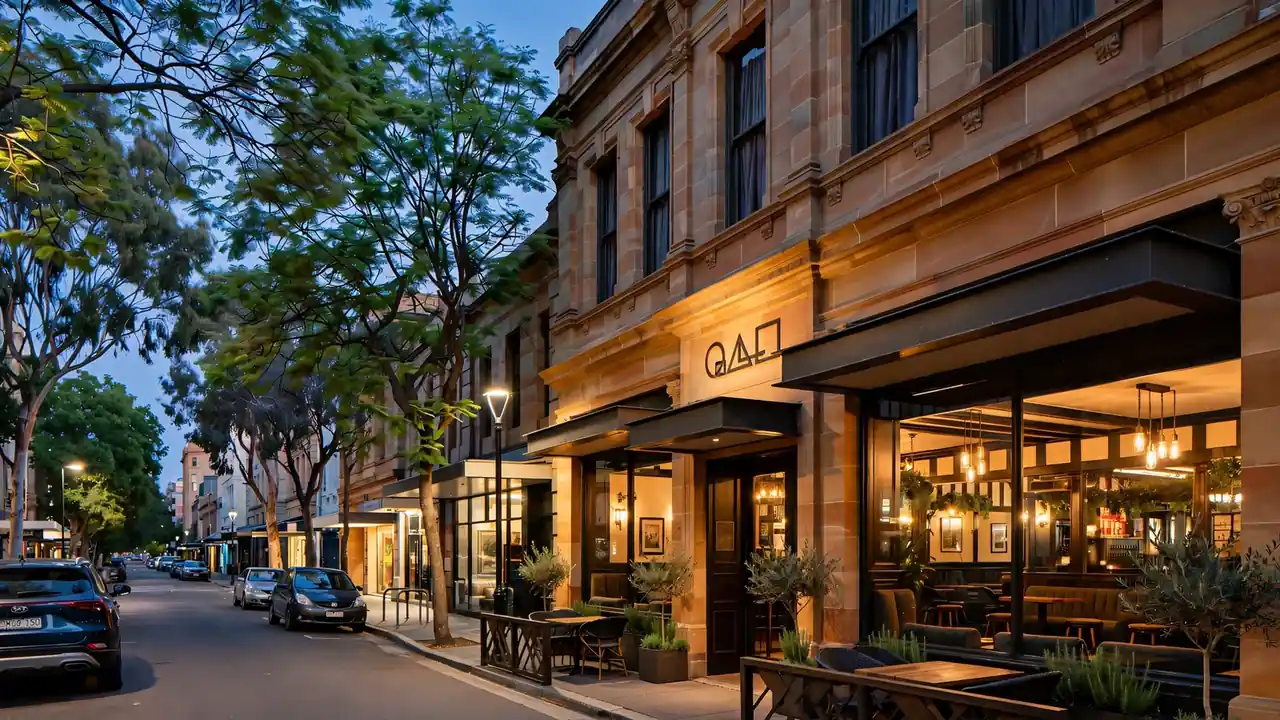
That is the boundary between description and promise. A return setting can distinguish one configuration from another; it cannot make an individual outcome certain. The game may be familiar. The result is not.
Finding a Venue Near an Airport or the CBD
Looking for pokies near an airport or in a Tasmanian central business district is a question of geography before it is a question of preference. A map may show places associated with gambling near a transport hub or city centre, but a search result is not a confirmed venue listing. Names, operating details and map pins can change; a result alone cannot establish that a particular place has pokies, how far it is from a terminal, or which route connects the two.
Tasmania also makes airport searches less precise than they first appear. “The airport” might mean different points of arrival, while a result described as nearby could refer to a broad area rather than a short walk. The same problem applies to CBD searches: a central label covers a district, not a measured distance from a hotel, station or street. Without a confirmed address and route, claims about what is closest are guesswork dressed as directions.
The distinction matters because proximity is practical information. Someone arriving with luggage, changing transport or meeting others may care more about an exact entrance and journey than a venue’s general description. A map can help establish those details once a specific address is known; it cannot settle them when the listing itself is uncertain. Nor does a phrase such as “near the airport” necessarily mean inside the airport. The wording is elastic. Geography is less so.
Attention A search result described as “nearby” may refer to a broad area rather than a short walk, and “near the airport” does not necessarily mean inside the terminal.
Searches that combine Tasmania with Victoria can also produce muddled results. The two names may appear together in travel or regional references, but that does not make a Victorian result a Tasmanian venue. Likewise, broad searches for northern Tasmania do not identify a particular town or establishment. The useful distinction is between a region, a city district and a verified street address: each answers a different question.
For a CBD club, the word “club” is not proof that gaming facilities are present. For an airport-area business, proximity to an airport is not proof that it is in the terminal or accessible from it. Those details require a current listing from the venue or a reliable map entry, checked against the address rather than inferred from a headline. A route should be judged from the relevant starting point, not from a loose label applied to an entire area.
There is also a simple boundary before any gambling setting is relevant: the legal age for gambling in Australia is 18. That threshold applies across gambling forms, including online pokies. It is not a venue-specific courtesy or a condition that varies by suburb. The rule sits beneath every location question, plain and unromantic.
A careful location check therefore separates three things: whether a place exists at the stated address, whether it offers the facilities being sought, and how to reach it from the actual point of departure. Search language tends to compress all three into “near me”. Maps do not. A pin can suggest proximity; it cannot turn suggestion into confirmation.
Gaming Venues and Their Public Responsibilities
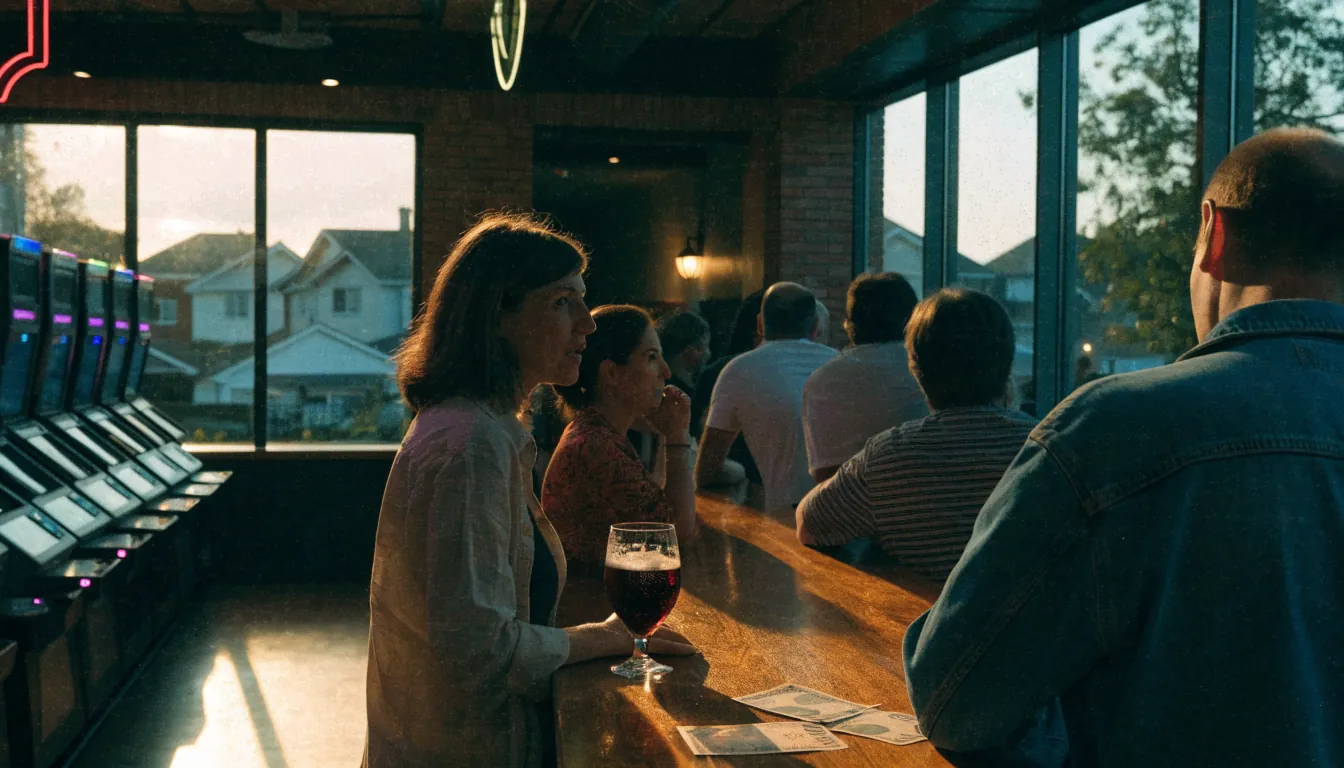
A venue’s reputation as a place for pokies says little about how it handles the moments when gambling stops looking recreational. Oversight is less visible than the machines themselves: it appears in who is on duty, what staff notice and whether troubling incidents leave a record. That paperwork is not decorative.
A report published by regionriverina.com.au described a requirement taking effect from 1 July for venues with more than 20 gaming machines to have a dedicated responsible gambling officer (RGO) on duty whenever the machines are operating. The report also described a one-month grace period for venues to remove signage and put the officer arrangement in place. These details should be read as reported requirements, not as a venue-by-venue account of Tasmania’s arrangements.
The distinction matters when comparing pokies venues in Tasmania. A rule framed around machine numbers does not identify which local venues fall within its scope, and a general description cannot establish whether a particular room has an RGO present at a particular time. Nor does a staffed position, by itself, tell the public how consistently concerns are handled. It sets a responsibility at the venue’s door; the work begins when someone has to recognise that a patron may be experiencing harm.
The same report described a gambling incident register for recording occurrences, including behaviour suggesting that a patron may be at risk of, or affected by, gambling harm. Such a register turns an otherwise private encounter into an accountable event within the venue. It can record that staff noticed something and responded, rather than leaving the matter to memory or informal conversation.
Responsible Gambling Officer (RGO) requirements
For venues with more than 20 gaming machines, a dedicated responsible gambling officer must be present while those machines are in operation. This requirement links the room’s operational hours directly to staffing levels.
There is an uneasy social history in that arrangement. Gambling has often been treated as an individual pastime, while the consequences can be visible to staff, family members and other patrons. Requiring a venue to assign responsibility and document incidents shifts part of the burden back to the institution that hosts the machines. It does not make gambling harmless. It does make inattention harder to present as nobody’s concern.
For people weighing up what counts as a better pokies venue, this kind of oversight is more meaningful than a glossy room or a confident claim about atmosphere. Yet the public record described here cannot rank establishments or confirm which Tasmania CBD venues have gaming machines. A venue-specific answer needs venue-specific information. A broad rule is not a directory.
The useful question, then, is not simply where the machines are, but what systems surround them. An RGO on duty and an incident register are practical markers of responsibility where the reported requirements apply. They do not reveal every interaction, and they cannot guarantee a safe outcome. Still, they name two obligations that can be examined more seriously than claims of being the best.
Online Searches, the Spirit of Tasmania, and What Is Verified
A search for pokies aboard the Spirit of Tasmania, or for a casino bearing Tasmania’s name, can leave several different questions tangled together. Is there gaming on a particular vessel? Does a named venue have pokies? Can the same games be played online? These are not interchangeable claims. A phrase in a search box is not evidence that a machine is installed, a room is open or a service is lawful.
The Spirit of Tasmania is a transport service, and the words “pokies on board” do not establish that gaming machines are available during a crossing. Nor does a search for Crown and Tasmania establish that a venue by that name operates in the state or offers pokies there. Those are specific claims about places and facilities; they require confirmation tied to the actual operator and location. Without that, treating a search result or a familiar name as proof would turn association into fact.
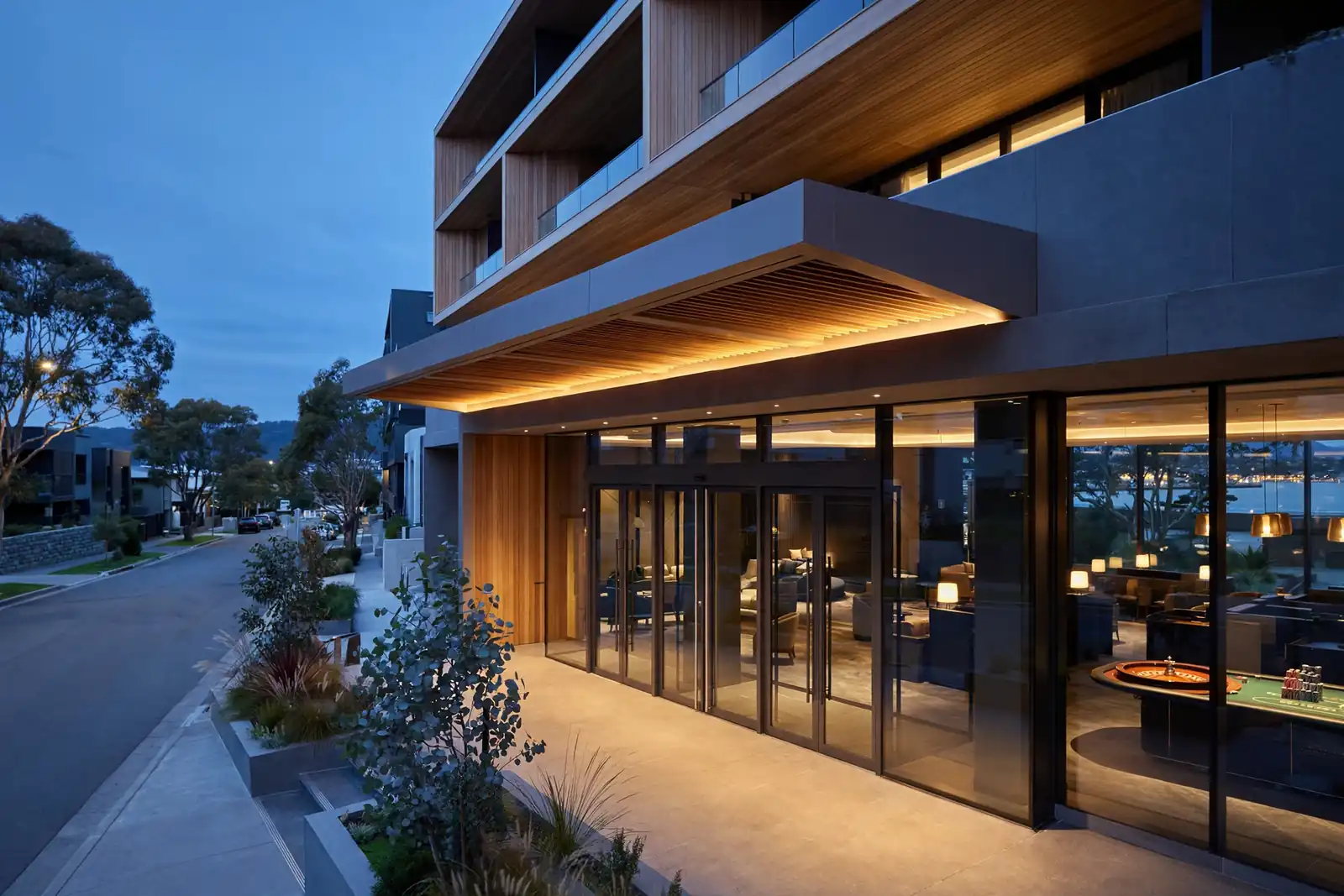
That distinction matters because physical venues and internet services sit under different rules. A land-based gaming room is not an online casino simply because both involve pokies. Conversely, a website reachable from Tasmania does not become a Tasmanian casino by using the island’s name or presenting a local-looking page. Names can travel easily across a screen. Legal permission does not.
The online boundary
Australia’s Interactive Gambling Act 2001 prohibits operators from providing real-money online casino games to people in Australia. Pokies fall within that category. No domestic licence has been issued for an online casino, so there is no Australian-licensed online casino offering real-money play.
The law is directed at the companies providing the service, not at individual players. An Australian resident is not criminally liable merely for playing on an offshore site that accepts them. That distinction is important, but it is not an endorsement. The service remains prohibited for the operator, and ACMA works to block illegal offshore gambling sites; internet service providers must comply with its blocklist. Access may therefore be interrupted, and a site appearing online does not mean it is approved or protected under Australian law.
Legal Risk
Australia’s Interactive Gambling Act 2001 prohibits operators from providing real-money online casino games to people in Australia, and no domestic licences have been issued.
This is the uncomfortable arrangement: the provider may be acting unlawfully, while the player is not the target of the prohibition. A legal boundary can be clear on paper and still leave a person facing practical uncertainty.
The phrase “online pokies in Tasmania for real money” therefore points toward a service that Australian law does not authorise. Adding “no deposit” or “bonus” does not change that. Promotional language is not a licence, and a welcome offer cannot supply the safeguards that an Australian-licensed casino would have provided—if such a licence existed. It does not.
What offshore play leaves exposed
Some offshore operators accept Australian players, and the law does not make those players liable simply for taking part. But if an offshore casino refuses to pay winnings, an Australian player has no legal recourse in Australia against it. That is a substantial practical difference between being able to access a website and having a reliable remedy when a dispute arises.
A site’s polished appearance, a payment option or a Tasmanian reference cannot resolve that problem. Nor does a claim about a game’s reputation establish that an operator is accountable to Australian authorities. The question is not merely whether a page loads or a deposit can be made. It is what happens when access is cut off, an account is disputed or a withdrawal is withheld—and who, under Australian law, can require the operator to put matters right.
For searches about “best-paying” pokies, an online ranking is especially easy to mistake for assurance. A list can describe what a publisher says about games or sites; it cannot guarantee an individual outcome, establish an Australian licence or create a route to recover disputed money. In an online setting where no domestic casino licence exists, the word “best” may conceal the more consequential question of who is responsible.
A name is not a venue
The same care applies to searches that join Tasmania to a casino name, a ferry or a nearby place. A location in a search phrase can describe what someone hopes to find, not what is actually operating there. Before treating a venue claim as real, the relevant details have to belong to that venue: its identity, its facilities and the nature of the service. A website borrowing a place-name is not a substitute.
Online and physical gambling can look alike in a short search result, but their legal status is not interchangeable. A physical venue’s existence would not validate an offshore online service, and an online site’s branding would not prove the presence of pokies aboard a vessel or inside a named Tasmanian casino. The distinction is less glamorous than a bonus banner. It is more useful.
If an offshore casino refuses to pay winnings, an Australian player has no legal recourse in Australia against it.
Tasmania’s place-name can be attached to searches for physical pokies, online games and offers promising play without an initial deposit. Those phrases may point in different directions, but the legal position for real-money online casino games remains the same across Australia: operators cannot lawfully provide them to people in the country without a domestic licence, and none has been issued. A site that accepts Australian customers is not transformed into an Australian-licensed casino by doing so. Nor does player non-liability erase the risk of having no Australian legal remedy if winnings are withheld.
The careful reading of these searches is therefore modest. A phrase about a ferry does not verify gaming aboard it; a casino name does not verify a Tasmanian venue; and an online offer does not establish lawful, locally accountable play. The screen can make all three look equally close. They are not.
Tasmania’s Pokies in the Wider Venue Picture
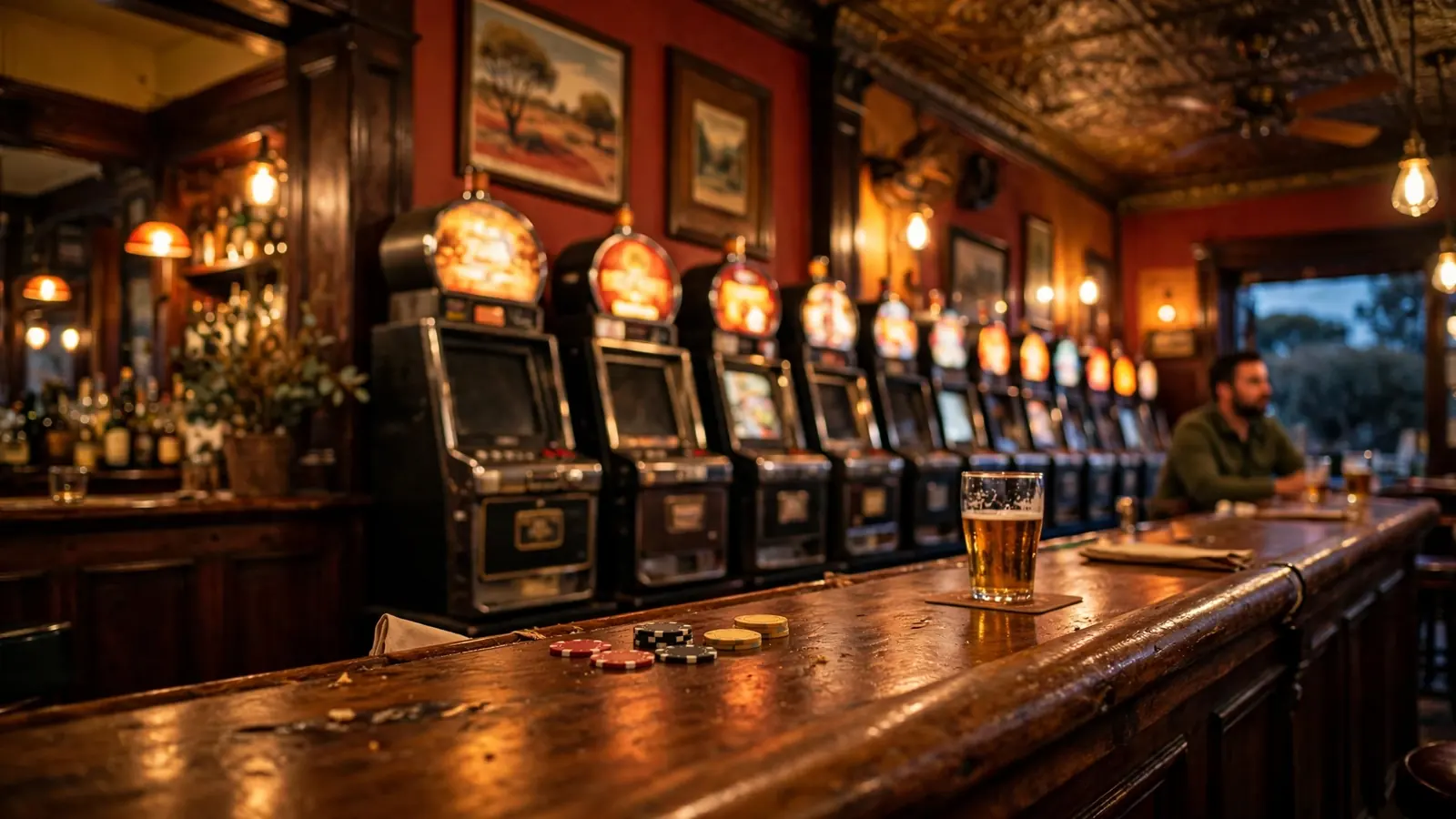
The phrase “best pokies in Tasmania” can suggest a neat local shortlist: a handful of machines, perhaps distinguished by a celebrated feature or a generous reputation. But a venue’s wider setting matters too. Pokies are part of a social environment, and the practical safeguards around gambling belong in that picture alongside the machines themselves.
Responsible-gambling tools are designed to put boundaries around time and money. Deposit limits set a ceiling on what can be added to an account or gambling facility; loss limits focus on how much can be lost. Session time limits mark a stopping point by duration rather than dollars. Self-exclusion is different again: it allows a person to bar themselves from gambling settings or services covered by the arrangement.
These tools address different pressures. A money limit cannot, by itself, tell someone when a session has become emotionally difficult; a time limit does not control spending. Self-exclusion is a more decisive barrier, rather than a reminder to pause. Their value lies in that distinction, not in any promise that a particular setting will suit everyone.
The existence of these measures also changes the way “best” might be understood. A machine’s name or presentation is only one part of a gambling environment. The ability to set limits, take a break or step away altogether belongs to the other part: the human arrangements made around an activity designed to hold attention. It is less glamorous than a bright screen. It is also more consequential.
Questions about maximum bets or cash payouts have a different character from questions about safeguards. They concern the terms of particular machines or venues, not a general feature of Tasmanian pokies. Without details tied to a specific setting, a broad claim about those limits would give an impression of certainty that the subject does not permit. A search for a particular town or venue likewise needs care: a place-name alone does not establish what facilities operate there.
In the wider picture, responsible-gambling tools are not a ranking system for machines and do not turn one game into a safer choice by themselves. They are ways of defining boundaries around gambling. The distinction matters in a country where leisure is often organised around rooms, clubs and shared routines: public safeguards say something about how an activity is managed, not whether any individual spin will be kind.
Responsible Gambling Tools
- Deposit limits set a ceiling on added funds
- Loss limits control how much can be lost
- Session time limits mark a stopping point by duration
- Self-exclusion allows a person to bar themselves from gambling services
CBD Clubs and the Records Behind Responsible Gambling
Interest in clubs with pokies in a central business district often turns on two separate questions: whether a particular club has gaming facilities, and what happens when gambling appears to be causing harm. Those questions should not be collapsed. A club’s name, location or community role does not establish that it operates pokies, and a record-keeping requirement cannot serve as a directory of gaming venues.
A report by regionriverina.com.au describes a requirement for venues to keep a gambling incident register. The register is intended to capture details of occurrences, including behaviour suggesting that a patron may be at risk of gambling harm or already affected by it. That makes the record an account of incidents and responses, not a public tally of machines or a ranking of clubs.
The distinction matters in searches for Tasmania’s CBD pokies. A register might help a venue recognise that a concern has arisen and preserve a record of what happened. It does not, by itself, show how often harm occurs across a city, whether a particular club has pokies, or whether a person who has self-excluded can enter a given venue. Those are different questions, requiring different evidence.
There is a quieter civic point here. Clubs are often imagined as social institutions first: places of meals, meetings and local fundraising. Gaming facilities, where present, add another responsibility to that public role. Recording incidents makes conduct less dependent on memory or informal conversation. It also makes the quality of the record important: a register is useful only insofar as it captures relevant events clearly and can support appropriate follow-up.
The word “record” can sound reassuring. It is not a cure, and it does not guarantee that every warning sign will be recognised. Nor does the existence of an incident register mean its contents are open to public inspection. Its significance is narrower, but still substantial: gambling-related concerns are treated as events a venue should document, rather than as private episodes that simply disappear when a patron leaves.
For anyone trying to establish whether a specific CBD club offers pokies, general statements about incident recording cannot settle the matter. For anyone asking how clubs account for signs of gambling harm, the register is the more pertinent subject. The two interests meet at the venue door, but they are not the same story.
Cashless Pokies and the Newcastle Search
Cashless play changes how money reaches a machine; it does not, by itself, describe a different kind of pokie. The phrase can cover several arrangements, from electronic payment at a venue to systems that keep track of funds without notes or coins. Those distinctions matter: a search for cashless pokies in Tasmania does not, on its own, identify what a particular machine accepts or how a venue handles payment.
The word “cashless” can sound tidier than the reality. Money still leaves an account, even when no banknotes pass through a hand. Deposit limits, loss limits and session time limits can help make spending more visible and bounded; self-exclusion is another available responsible-gambling tool. None changes the random nature of a spin or turns a payment method into evidence about a machine’s returns.
The Newcastle part of the phrase calls for a separate geographical distinction. Newcastle is not a Tasmanian city, so a result associated with Newcastle may concern another location rather than a Tasmanian venue. A place name alone is a poor guide to where a machine is, what it offers or whether cashless payment is available.
That is the useful boundary between the two ideas: one concerns the way a pokie may be paid for, the other concerns where someone is looking. Neither establishes that a particular Tasmanian venue has cashless machines. Nor does the label say whether play is easier to monitor or manage in practice; that depends on the controls offered and how they are used.
For Tasmania, “cashless pokies” is best treated as a description of a payment question, not a promise of a feature at a named location. Newcastle belongs to a different location check. Small distinction; substantial difference.
What is the legal age for online gambling in Australia?
You must be at least 18 years old to gamble online in Australia.
Are online pokies legal for Australian players?
Yes, Australian players can legally play on offshore sites that accept them, but offering real-money online pokies to Australians without a domestic licence is illegal, and no Australian-licensed online casino exists. Players have no legal recourse in Australia if an offshore casino refuses to pay their winnings.
What does “wagering requirement” actually mean?
It is the amount you must bet, usually calculated as a multiple of the bonus, before you can withdraw bonus winnings. For example, a $500 bonus with a 40x requirement means $20,000 in bets.
Written by the editors at Big Candy Casino.